Hail history in Tennessee
We counted the days with NOAA hail reports within 15 miles of the center of 6 Tennessee cities since 2010.
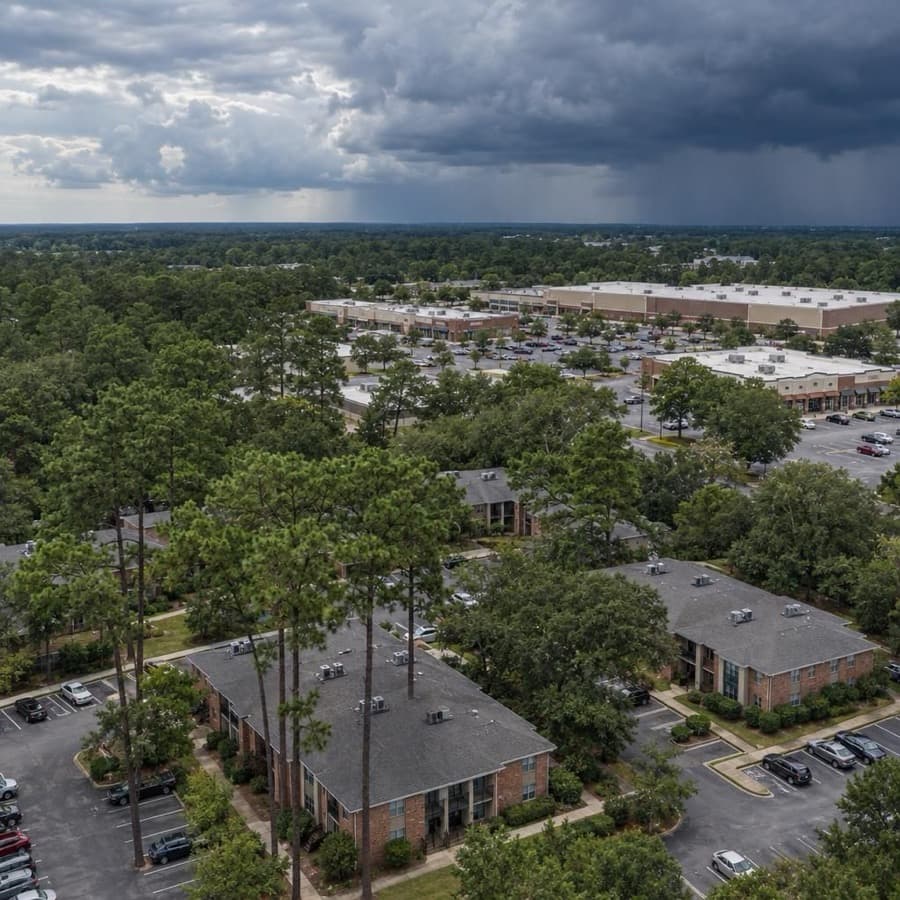
- Hail days near Nashville since 2010, the most in Tennessee
- 73
- Largest hail reported, near Clarksville
- 3.0 in
- Tennessee cities tracked
- 6
Source: NOAA/NWS Storm Prediction Center
Data through November 1, 2026
Tennessee cities by hail days
Source: NOAA/NWS Storm Prediction Center
Data through November 1, 2026
| City | Hail days since 2010 | Largest hail |
|---|---|---|
| Nashville | 73 | 2.5 in |
| Memphis | 69 | 2.25 in |
| Knoxville | 44 | 2.75 in |
| Clarksville | 34 | 3.0 in |
| Chattanooga | 33 | 2.5 in |
| Kingsport | 27 | 2.75 in |
About this data
- Each city counts reports within 15 miles of its center, not of any one property.
- Reports come from trained spotters and the public, so they cluster near towns and roads.
- No report does not mean no hail. Hail can fall where no one is there to report it.
- This is not a damage or insurance assessment.
Storm risk in Tennessee
Damaging thunderstorm wind and tornadoes are the storm risks that matter most for buildings in Tennessee, followed by hail, flash flooding and winter ice.4,3 Tennessee averaged about 31 tornadoes a year from 1995 to 2025, and in 2025 it had 216 major hail events, the eighth most of any state by Storm Prediction Center counts.3,2
How often storms hit Tennessee
| Hazard | How often | What it means for buildings |
|---|---|---|
| Damaging wind | The most common severe weather. The Nashville radar area averaged 57 days a year with damaging wind reports from 1980 to 2006, against 33 days with hail and 11 with tornadoes. | Straight-line gusts peel roof edges and membranes, topple rooftop equipment and drop trees on buildings and power lines. |
| Tornadoes | About 31 a year statewide from 1995 to 2025 by NWS Nashville counts. The Nashville radar area ranked 10th of 141 US radar areas for how often F2 or stronger tornadoes strike. | Strong tornadoes tear off roofs and collapse walls; weaker ones still break windows and lift roof coverings. |
| Hail | 27 to 73 hail days since 2010 within 15 miles of each of the six Tennessee cities on this page, with hail up to 3 inches near Clarksville. | Hail breaks roof covers, skylights and rooftop unit fins, and dents metal roofs and siding. |
| Flooding | Flash floods from slow, heavy storms and river floods such as the Cumberland's. The May 2010 flood caused about $2 billion in damage in metro Nashville and close to $3 billion statewide. | In 2010, floodwater and rising water tables damaged downtown Nashville commercial buildings, basements and a water treatment plant. Ground floors, basements and mechanical rooms are the most exposed. |
| Winter storms and ice | Ice storms and hard freezes hit in some winters, as Winter Storm Fern did with ice, snow and freezing temperatures in January 2026. | Ice and falling trees load and puncture roofs, and extreme cold freezes pipes and sprinkler lines. |
The city hail counts are days with at least one NOAA hail report within 15 miles of a city's center, not hits on any one building. The SPC radar-area figures cover a circle of about 124 nautical miles around the Nashville radar, so they describe Middle Tennessee as a whole rather than one city.1,4
Rules owners in Tennessee should know
- Bad faith penalty (Tenn. Code 56-7-105): if an insurer refuses to pay a loss within 60 days after the policyholder makes a demand, and a court or jury finds the refusal was not in good faith, the insurer can owe up to 25 percent of the loss on top of the loss and interest, measured by the added expense, loss and attorney fees the refusal caused.7
- Public adjusters (Tenn. Code 56-6-913): no public adjuster may take any fee, retainer or deposit before a claim settles. The section's percentage caps, such as 15 percent of the settlement when hired before the insurer's first offer, do not apply to commercial insurance.8
- Contractor license: Tennessee requires a state contractor's license before bidding or pricing when a project's total cost is $25,000 or more, and out-of-state contractors must hold a Tennessee license too. Below that amount, local building offices set license and permit rules.9
- Contractor theft (Tenn. Code 39-14-105): the Department of Commerce and Insurance says the state's felony theft law applies when a contractor takes money and fails to perform the work within 90 days.9
- Department mediation: when an insurer declines a claim on a policy written in Tennessee, the Department of Commerce and Insurance can mediate between the insurer and the policyholder.6
Before the next storm
- Roof edges: IBHS calls for single-ply roofs to have a perimeter peel-stop 1 to 2 feet from the edge, and for edge flashing and coping to meet ANSI/SPRI/FM 4435/ES-1. IBHS calls the roof the most vulnerable part of every building, and edges and corners carry the highest wind pressures.10
- Hail-rated roofs: when reroofing, IBHS recommends FM 4470 Class 1-SH or UL 2218 Class 4 for low-slope roofs and UL 2218 Class 4 or FM 4473 Class 3 or 4 for steep roofs in hail-prone areas, plus hail guards on rooftop condenser fins.10
- Ice loads: after an ice storm, estimate what is on the roof. IBHS says an inch of ice adds about 5 pounds per square foot, and advises having snow and ice removed once the load passes 20 to 25 pounds per square foot.11
- Flood policy timing: a new NFIP policy typically takes 30 days to go into effect, FEMA says, and buildings in high-risk flood areas with mortgages from government-backed lenders must carry flood insurance.12
Sources
Written by the Cloudbreak team. Numbers, dates and rules cite the published sources below.
- 1. Cloudbreak: NOAA/NWS Storm Prediction Center storm reports, as counted on the Cloudbreak hail history page for Tennessee
- 2. Insurance Information Institute: Facts + Statistics: Hail
- 3. NWS Nashville: Tennessee Tornado Stats
- 4. NOAA Storm Prediction Center: OHX (Nashville) Severe Weather Climatology, 1980 to 2006
- 5. National Weather Service: Flooding in Tennessee
- 6. Tennessee Department of Commerce and Insurance: TDCI Shares Insurance, Safety, and Contractors Information in Aftermath of Winter Storm Fern
- 7. Tennessee Code (text via Justia): Tenn. Code 56-7-105: Additional liability upon insurers for bad-faith failure to pay promptly
- 8. Tennessee Code (text via Justia): Tenn. Code 56-6-913: Fees charged by public adjuster
- 9. Tennessee Department of Commerce and Insurance: TDCI Shares Consumer Tips to Avoid Scammers, Fly-By-Night Contractors When Rebuilding After Helene
- 10. IBHS: Commercial Roofs Best Practices Guide
- 11. IBHS: Commercial Risk Engineering Bulletin: Winter Weather
- 12. FEMA: Flood Insurance
Storms in Tennessee
About two-thirds of Middle Tennessee's tornadoes have come in March, April and May, with a smaller second peak around November, and the largest cluster of tornadoes per square mile is in Davidson, Rutherford, Sumner, Trousdale and Wilson counties, NWS Nashville says.1 In NWS Morristown's area, which includes East Tennessee, tornadoes peak in April and hail in May, and damaging wind becomes the main severe hazard in June.2
Notable storms
- December 9, 2023An EF3 tornado with 150 mph winds tracked 47.75 miles from Clarksville into Kentucky, killing 4, destroying 114 homes and badly damaging 268 more. An EF2 through Madison, Hendersonville and Gallatin killed 3 and damaged about 600 homes and businesses in Sumner County, NWS Nashville says.3
- March 31, 2023An EF3 tornado with 150 mph winds destroyed several homes and badly damaged dozens more south of Covington, killing 1 and injuring 28. Another EF3, with 155 mph winds, tracked 85.9 miles from Hardeman County across McNairy County to Lewis County, destroying homes and killing 9, NWS Memphis says.4
- March 3, 2020An EF3 tornado with 165 mph winds tracked more than 60 miles across North Nashville, East Nashville, Donelson, Hermitage and Mount Juliet, killing 5, and an EF4 with 175 mph winds killed 19 near Cookeville, NWS Nashville says. Hail up to 3 inches broke windshields and damaged roofs in Charlotte. NOAA's Storm Events Database cites state estimates of $1.6 billion in damage across Middle Tennessee.5,6
- March 2, 2012Hail up to baseball size fell across Middle Tennessee, NWS Nashville says, and golf ball size hail fell near Nashville's airport. NOAA's Storm Events Database lists $25 million in property damage from 2-inch hail at Berry Hill in Davidson County.7,8,9
- October 18, 2011Hail up to baseball size fell from Barfield north through central Murfreesboro, damaging thousands of cars and hundreds of homes and businesses, and NOAA's Storm Events Database lists $5 million in property damage in Rutherford County. Hail up to baseball size also damaged cars, homes, businesses and schools around Tullahoma.10,11
- April 27, 2011More than 50 tornadoes struck the East Tennessee area, killing 32 people, injuring more than 200 and damaging hundreds of homes and businesses, NOAA's Storm Events Database says. Baseball-size hail fell near Knoxville and Bristol, damaging vehicles southeast of Knoxville.12,13
Warnings and alerts
NWS offices in Memphis, Nashville and Morristown cover most of Tennessee, and NWS Huntsville covers Franklin, Lincoln and Moore counties.14
Sources
- 1. NWS Nashville: Middle Tennessee Tornado Climatology
- 2. NWS Morristown: Severe Weather Climatology
- 3. NWS Nashville: December 9, 2023 Tornado Outbreak
- 4. NWS Memphis: March 31 to April 1, 2023 Tornado Outbreak
- 5. NWS Nashville: March 3, 2020 Middle Tennessee Tornadoes
- 6. NOAA NCEI: Storm Events Database: Hail, Dickson County, March 3, 2020
- 7. NWS Nashville: March 2, 2012 Severe Weather Outbreak
- 8. NOAA NCEI: Storm Events Database: Hail, Nashville airport, March 2, 2012
- 9. NOAA NCEI: Storm Events Database: Hail, Berry Hill, March 2, 2012
- 10. NOAA NCEI: Storm Events Database: Hail, Rutherford County, October 18, 2011
- 11. NOAA NCEI: Storm Events Database: Hail, Coffee County, October 18, 2011
- 12. NOAA NCEI: Storm Events Database: Hail, Knox County, April 27, 2011
- 13. NOAA NCEI: Storm Events Database: Hail, Sullivan County, April 27, 2011
- 14. National Weather Service: NWS public forecast zones, Southern Region
Hail history in other states
- Alabama
- Alaska
- Arizona
- Arkansas
- California
- Colorado
- Connecticut
- District of Columbia
- Florida
- Georgia
- Hawaii
- Idaho
- Illinois
- Indiana
- Iowa
- Kansas
- Kentucky
- Louisiana
- Maine
- Maryland
- Massachusetts
- Michigan
- Minnesota
- Mississippi
- Missouri
- Montana
- Nebraska
- Nevada
- New Hampshire
- New Jersey
- New Mexico
- New York
- North Carolina
- North Dakota
- Ohio
- Oklahoma
- Oregon
- Pennsylvania
- Rhode Island
- South Carolina
- South Dakota
- Texas
- Utah
- Virginia
- Washington
- West Virginia
- Wisconsin
- Wyoming