Hail history in Hawaii
NOAA hail reports within 15 miles of the center of Honolulu since 2010: 2 hail days, largest 4.25 in.
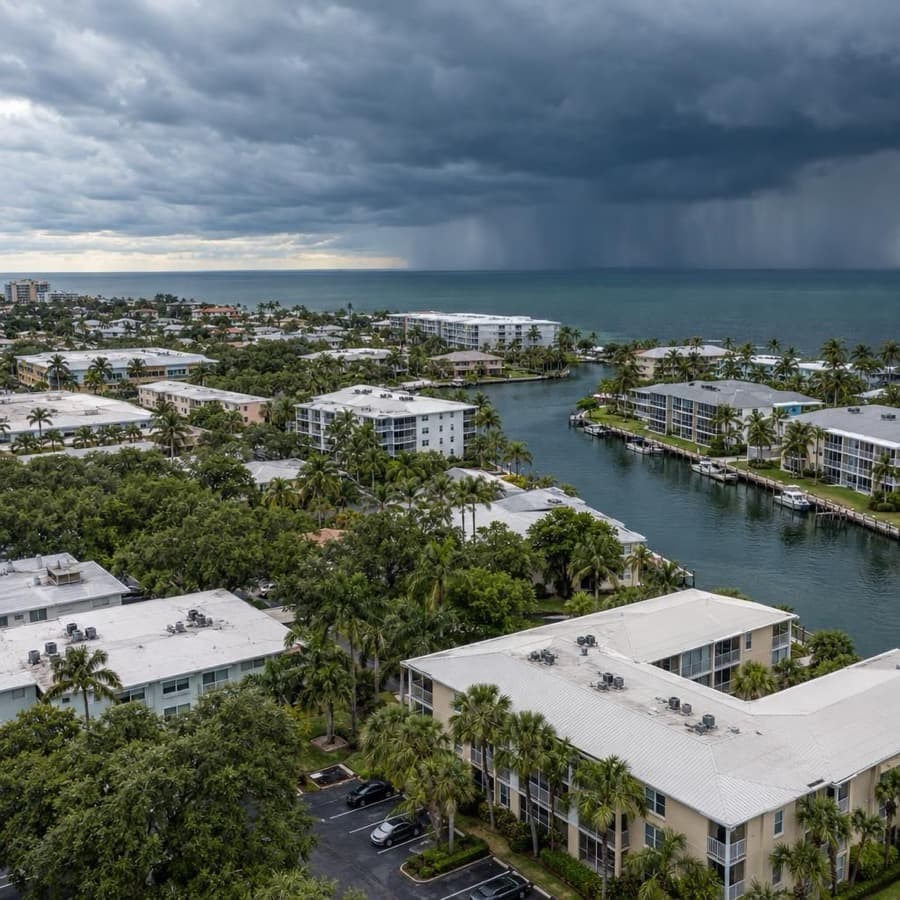
- Hail days near Honolulu since 2010, the most in Hawaii
- 2
- Largest hail reported, near Honolulu
- 4.25 in
- Hawaii city tracked
- 1
Source: NOAA/NWS Storm Prediction Center
Data through November 1, 2026
Hawaii cities by hail days
Source: NOAA/NWS Storm Prediction Center
Data through November 1, 2026
| City | Hail days since 2010 | Largest hail |
|---|---|---|
| Honolulu | 2 | 4.25 in |
About this data
- Each city counts reports within 15 miles of its center, not of any one property.
- Reports come from trained spotters and the public, so they cluster near towns and roads.
- No report does not mean no hail. Hail can fall where no one is there to report it.
- This is not a damage or insurance assessment.
Storm risk in Hawaii
Hurricanes, flooding and high wind are the storm risks that matter most for buildings in Hawaii, followed by wind-driven wildfire. Hail is not a major risk here: since 2010, hail was reported within 15 miles of Honolulu on only 2 days.1,2 Compared with the mainland, Hawaii sees fewer and milder thunderstorms, floods and hailstorms, NWS Honolulu says. But about 0.5 percent of the state's land burns each year, a share equal to or greater than any other state's, and the state hazard plan warns that hurricanes, though rare, can be dramatic, damaging and deadly when they hit.2,6,3
How often storms hit Hawaii
| Hazard | How often | What it means for buildings |
|---|---|---|
| Hurricanes and tropical storms | Four to five tropical cyclones form in or cross the central Pacific in an average year, and most stay far from the islands. Since 1950, five have caused serious damage in the state, including Hurricane Iniki, a Category 4 storm that hit Kauai in 1992. | Wind strips roofs and breaks windows, and surge and high surf flood shoreline buildings. NOAA notes that storms that never make landfall can still do considerable damage with wind and surf. A Category 4 surge could cover 6.38 percent of the City and County of Honolulu's land. |
| High wind | Trade winds blow about 70 percent of the time. Strong trades, kona storms and fast cold fronts bring damaging winds on a regular basis, and downslope kona gusts through mountain gaps can top 100 mph. | Uplift peels shingles, tiles and other roof coverings, and falling trees hit buildings and power lines. The state plan notes that albizia limbs can break in gusts of only 35 mph. |
| Flooding | The state plan expects about 19 flood events and 131 heavy rain events that cause flooding each year, and puts the chance of a FEMA flood declaration in any year at 40 percent. | Flash floods push water and debris through ground floors, parking and site work, and high surf and surge flood coastal buildings. |
| Wildfire | About 0.5 percent of the land burns each year, and fire-prone non-native grasses and shrubs cover over 25 percent of the state. | Fire spreads fast from the mountains to the ocean, the state plan says, so buildings next to dry grassland are exposed even in towns. |
| Hail | Hail was reported on 2 days since 2010 within 15 miles of Honolulu, the only Hawaii city on this page, with a largest stone of 4.25 inches. NWS Honolulu says Hawaii usually does not have hailstorms. | Rarely a design concern, though large hail can break skylights and solar panels. |
Direct hurricane hits are rare, but the state plan says large swells and high winds from near misses are quite common, and every county has been affected by hurricanes. Kona storms blow from the south and southwest, against the usual trade winds, so the normally sheltered leeward sides of the islands take the wind instead.3,7
The hail count is days with at least one NOAA hail report within 15 miles of Honolulu's center, not hits on any one building. At 2 days in more than 15 years, hail is minor next to wind, water and fire.1
Rules owners in Hawaii should know
- Hurricane coverage: the Hawaii Insurance Division says most standard homeowners and renters policies leave out hurricane and flood damage, so hurricane cover is bought as a separate policy or an endorsement. Its condo FAQ says the few admitted insurers writing condominium master policies often cover 20 to 30 percent or less of a building's hurricane exposure, leaving the rest to surplus lines insurers, whose rates the Division does not regulate.9,10
- Hurricane trigger: most hurricane policies in Hawaii use a 72-hour clause tied to the Central Pacific Hurricane Center. Damage in the 72 hours after the Center issues a hurricane watch or warning is handled under the hurricane policy, and the Insurance Division says the exact trigger wording varies by insurer.11
- Hurricane Relief Fund (HRS chapter 431P): the state fund sells hurricane-only commercial policies to condominium and townhouse associations that two licensed insurers have turned down and whose buildings are insured for more than $10 million. Cover is excess only, above the first $10 million and up to $140 million, for one-year terms that must be applied for again each year through a licensed producer at least 30 days before the start date. Act 296 of 2025 also lets the Hawaii Property Insurance Association cover condominium buildings for other perils.12,10
- Condominium insurance (HRS 514B-143): unless the declaration or bylaws say otherwise, a Hawaii condominium association must carry property insurance, commercial liability insurance, fidelity bonding and directors and officers coverage, and it must keep flood insurance if the project is in a special flood hazard area.13
- Attorney fees (HRS 431:10-242): when an insurer contests liability under a policy and a court orders it to pay benefits, the policyholder is awarded reasonable attorney fees and the costs of suit on top of the benefits. Hawaii courts have held that an arbitration is not a suit under this section.14
- Wind design code: Hawaii's amendments to the 2018 International Building Code adopt Appendix W, the state's wind design provisions for new construction, and Appendix U, its hurricane sheltering provisions. Appendix W accounts for how the islands' terrain speeds up wind at each site.15,7
- Flood maps and permits: the Department of Land and Natural Resources coordinates the NFIP with Hawaii's four participating counties, each with a floodplain manager who sets permit requirements in flood zones. Its Flood Hazard Assessment Tool shows FEMA flood zones along with tsunami evacuation and sea level rise exposure areas; new or substantially improved buildings in a special flood hazard area must meet county floodplain rules, and federally backed mortgages there require flood insurance.16,17
Before the next storm
- Coverage before the season: the Hawaii Insurance Division warns that once a hurricane or tropical storm is on the horizon, insurers may pause new or expanded policies, so changes need to be in place before hurricane season begins June 1.9
- Flood policy timing: a new NFIP policy typically has a 30-day waiting period before it takes effect, the Insurance Division notes, and flooding can happen outside high-risk areas too.9
- Roof and wall ties: the Insurance Division points to hurricane clips at roof-to-wall connections, shields for window openings and roof-to-ground tie-downs as ways to help buildings withstand severe wind, and some insurers give premium credits for them.11
- Roof ballast and edges: IBHS treats all of Hawaii as a hurricane-prone region and advises against stone ballast, loose roof pavers and green roofs there. Roof edge flashing and coping should meet ANSI/SPRI/FM 4435/ES-1 for the site's design pressures, since loose edges and ballast turn into wind-borne debris.18
Sources
Written by the Cloudbreak team. Numbers, dates and rules cite the published sources below.
- 1. Cloudbreak: NOAA/NWS Storm Prediction Center storm reports, as counted on the Cloudbreak hail history page for Hawaii
- 2. NWS Honolulu: Climate of Hawai`i
- 3. Hawaii Emergency Management Agency: 2023 Hawaii State Hazard Mitigation Plan, Section 4.9: Hurricane
- 4. NWS Honolulu / Central Pacific Hurricane Center: 2021 Hurricane Season Summary for the Central Pacific Basin
- 5. NOAA National Hurricane Center: Tropical Cyclone Climatology
- 6. Hawaii Emergency Management Agency: 2023 Hawaii State Hazard Mitigation Plan, Section 4.15: Wildfire
- 7. Hawaii Emergency Management Agency: 2023 Hawaii State Hazard Mitigation Plan, Section 4.16: Windstorm
- 8. Hawaii Emergency Management Agency: 2023 Hawaii State Hazard Mitigation Plan, Section 4.6: Flood
- 9. Hawaii Department of Commerce and Consumer Affairs, Insurance Division: Hawaii Residents Encouraged to Review Insurance Policies in Preparation for Hurricane Season
- 10. Hawaii Department of Commerce and Consumer Affairs, Insurance Division: Condo Insurance FAQs
- 11. Hawaii Department of Commerce and Consumer Affairs, Insurance Division: Frequently Asked Questions on Hurricane Insurance
- 12. Hawaii Hurricane Relief Fund: Hawaii Hurricane Relief Fund: Hurricane Insurance Available for Condominium and Apartment Owners
- 13. Hawaii Real Estate Commission: Resources for Condominium Owners, Prospective Buyers, and Boards of Directors and Associations
- 14. Hawaii State Legislature: HRS 431:10-242: Policyholder and other suits against insurer
- 15. Hawaii Administrative Rules (text via Cornell LII): Hawaii State Building Code Council, Amendments to the 2018 International Building Code: Appendices
- 16. Hawaii Department of Land and Natural Resources, Engineering Division: National Flood Insurance Program
- 17. Hawaii Department of Land and Natural Resources: Flood Hazard Map Property Information Worksheet
- 18. IBHS: Commercial Roofs Best Practices Guide
Storms in Hawaii
NWS Honolulu says Hawaii's heaviest rains come from winter storms between October and April. Hurricanes and hailstorms are uncommon, and thunderstorms, hail and floods are usually less frequent and less severe than on the mainland.1 The central Pacific hurricane season runs June 1 to November 30.2
Notable storms
- March 20, 2026Slow-moving storms flooded Oahu's North Shore overnight, sweeping away homes and cars in Waialua and Haleiwa and flooding homes in northeast Oahu. NOAA's Storm Events Database lists $1 billion in property damage on Oahu, based on officials' island-wide estimate.3
- March 13, 2026A kona storm's winds blew roofs off in Kaneohe, Kahaluu, Pearl City and Hawaii Kai on Oahu on March 13 and 14. Flash flooding on Maui caused $20 million in property damage, NOAA's Storm Events Database shows.4,5,6,7
- August 8, 2023High winds gusted to 82 mph on Oahu and the Big Island and up to 67 mph on Maui from Aug. 7 to 9, NWS Honolulu's gust summary shows. Wind-downed power lines blocked roads as a wildfire destroyed most of Lahaina, and Storm Events lists over 2,200 structures burned, 102 deaths and $5.5 billion in property damage.8,9
- August 23, 2018Hurricane Lane dropped up to 58 inches of rain on the Big Island, a state record for a tropical cyclone. There, flooding affected more than 100 structures, and public infrastructure took at least $20 million in damage. On Maui, gusts over 50 mph fanned West Maui wildfires that destroyed 21 homes.10
- August 8, 2014Tropical Storm Iselle came ashore on the Big Island's Kau coast east of Pahala with winds near 50 knots (58 mph). Its winds toppled large numbers of albizia trees on the island's east and southeast sides, and NHC, citing media reports, says FEMA assessors found 11 homes destroyed and 50 damaged.11
- March 9, 2012A thunderstorm over windward Oahu dropped hail of 2 to 3 inches or more on Kaneohe and Kailua, including a 4.25-inch stone from the Aikahi neighborhood, Hawaii's largest on record. That morning, a waterspout came ashore at Lanikai as an EF0 tornado and damaged or destroyed several roofs in Lanikai and Enchanted Lakes.12,13
Warnings and alerts
NWS Honolulu covers all of Hawaii.14 The Hawaii Emergency Management Agency's Get Ready page links each county's emergency alert sign-up.15
Sources
- 1. NWS Honolulu: Climate of Hawai`i
- 2. NWS Honolulu / NOAA: NOAA predicts a below-normal 2024 central Pacific hurricane season
- 3. NOAA NCEI Storm Events Database: Storm Events: Flash Flood, Honolulu County, March 20, 2026
- 4. NOAA NCEI Storm Events Database: Storm Events: High Wind, Koolau Windward, March 13, 2026
- 5. NOAA NCEI Storm Events Database: Storm Events: High Wind, Central Oahu, March 13, 2026
- 6. NOAA NCEI Storm Events Database: Storm Events: High Wind, East Honolulu, March 13, 2026
- 7. NOAA NCEI Storm Events Database: Storm Events: Flash Flood, Maui County, March 13, 2026
- 8. NWS Honolulu: Summary of Peak Wind Gusts, August 7-9, 2023
- 9. NOAA NCEI Storm Events Database: Storm Events: Wildfire, Maui Leeward West, August 8, 2023
- 10. National Hurricane Center: Tropical Cyclone Report: Hurricane Lane
- 11. National Hurricane Center: Tropical Cyclone Report: Hurricane Iselle
- 12. NWS Honolulu: National Weather Service Office in Honolulu Confirms New State Record Hailstone
- 13. NOAA NCEI Storm Events Database: Storm Events: Tornado, Honolulu County, March 9, 2012
- 14. National Weather Service: Hawaii County Warning Forecast Areas
- 15. Hawaii Emergency Management Agency: Get Ready
Hail history in other states
- Alabama
- Alaska
- Arizona
- Arkansas
- California
- Colorado
- Connecticut
- District of Columbia
- Florida
- Georgia
- Idaho
- Illinois
- Indiana
- Iowa
- Kansas
- Kentucky
- Louisiana
- Maine
- Maryland
- Massachusetts
- Michigan
- Minnesota
- Mississippi
- Missouri
- Montana
- Nebraska
- Nevada
- New Hampshire
- New Jersey
- New Mexico
- New York
- North Carolina
- North Dakota
- Ohio
- Oklahoma
- Oregon
- Pennsylvania
- Rhode Island
- South Carolina
- South Dakota
- Tennessee
- Texas
- Utah
- Virginia
- Washington
- West Virginia
- Wisconsin
- Wyoming