Hail history in North Carolina
We counted the days with NOAA hail reports within 15 miles of the center of 9 North Carolina cities since 2010.
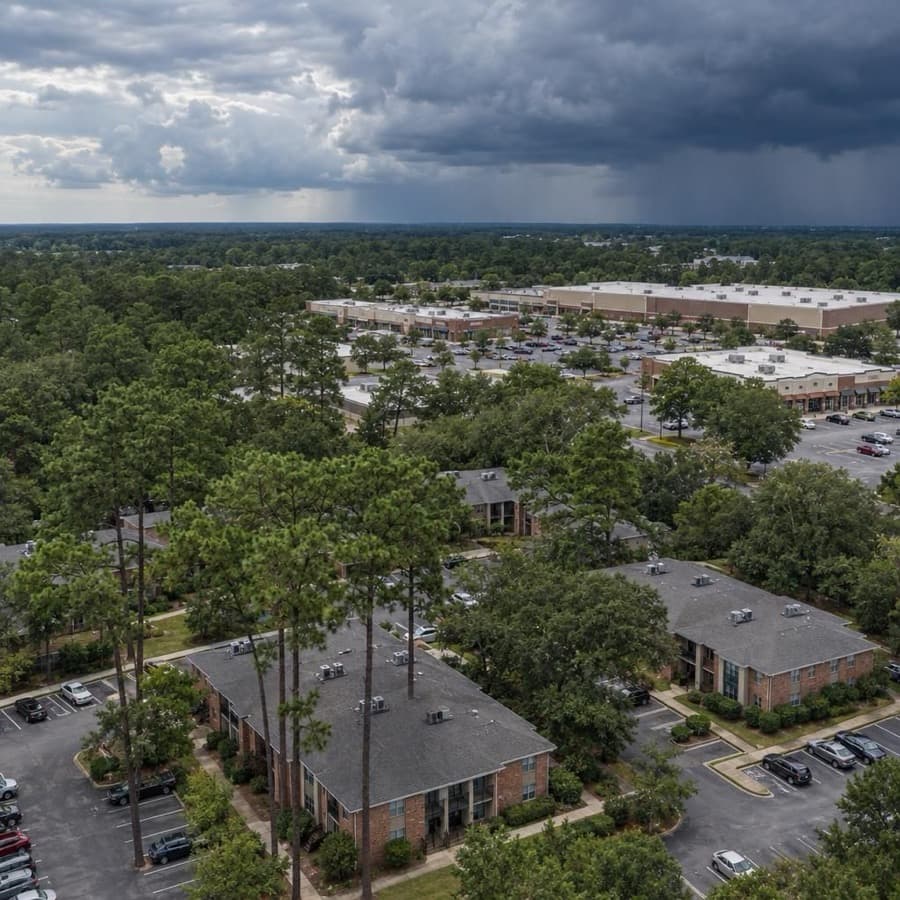
- Hail days near Hickory since 2010, the most in North Carolina
- 79
- Largest hail reported, near Charlotte
- 2.75 in
- North Carolina cities tracked
- 9
Source: NOAA/NWS Storm Prediction Center
Data through November 1, 2026
North Carolina cities by hail days
Source: NOAA/NWS Storm Prediction Center
Data through November 1, 2026
| City | Hail days since 2010 | Largest hail |
|---|---|---|
| Hickory | 79 | 2.0 in |
| Charlotte | 67 | 2.75 in |
| Asheville | 61 | 2.5 in |
| Raleigh | 51 | 2.75 in |
| Durham | 38 | 2.0 in |
| Winston-Salem | 36 | 1.75 in |
| Greensboro | 32 | 2.0 in |
| Wilmington | 27 | 1.75 in |
| Fayetteville | 27 | 2.5 in |
About this data
- Each city counts reports within 15 miles of its center, not of any one property.
- Reports come from trained spotters and the public, so they cluster near towns and roads.
- No report does not mean no hail. Hail can fall where no one is there to report it.
- This is not a damage or insurance assessment.
Storm risk in North Carolina
For commercial and multifamily buildings in North Carolina, hurricanes and tropical storms matter most, through coastal wind and surge and through flooding rain that reaches from the coast to the mountains. Hail, damaging thunderstorm wind, tornadoes and winter ice follow. North Carolina took 56 hurricane direct hits from 1851 to 2018, the third most of any state after Florida and Texas.2,3
How often storms hit North Carolina
| Hazard | How often | What it means for buildings |
|---|---|---|
| Hurricanes and tropical storms | 56 hurricane direct hits from 1851 to 2018, 7 of them major. From 1900 to 2024, 203 tropical cyclones affected the state, 66 of them hurricanes. | Wind tears roof covers, edges and openings and lets rain in, and surge floods low coastal buildings. |
| Flooding | Inland flooding from tropical rain is a hazard across the whole state, and a typical weather station records a day with 3 inches of rain or more about once every one to two years. | Water reaches ground floors, parking levels, elevator pits and electrical rooms, inland as well as on the coast. |
| Hail | Hail days since 2010 within 15 miles of the city center: Hickory 79, Charlotte 67, Asheville 61, Raleigh 51, with hail up to 2.75 inches near Charlotte and Raleigh. Large hail on 36 days a year on average within 124 nautical miles of the Raleigh radar (1980 to 2006). | Roof covers, skylights and rooftop condenser fins take the hits, and the same roof can be struck more than once in a season. |
| Damaging thunderstorm wind | Damaging wind reports on 52 days a year on average around the Raleigh radar (1980 to 2006), more days than hail or tornadoes. | Straight-line gusts peel roof edges and membranes, shift rooftop units and drop trees on buildings and parking. |
| Tornadoes | Tornado reports on 12 days a year on average around the Raleigh radar, where the yearly chance of a tornado at any one point is 0.027 percent (1980 to 2006). Tropical storms bring tornadoes too. | A direct hit on one building is rare, but across a portfolio the odds add up, and strong tornadoes can destroy a structure. |
| Winter storms and ice | Snow and ice storms, some from cold air trapped against the Appalachians. In February 2014, some areas got as much as a half inch of freezing rain. | Ice brings trees and power lines down onto roofs and parking, and cold outages can freeze pipes. |
The city counts are days with at least one hail report within 15 miles of each city's center since 2010, so they show how often hail falls near a city, not on one building. The radar figures come from Storm Prediction Center reports from 1980 to 2006 and cover a much larger circle, 124 nautical miles around the Raleigh radar.1,4
For an owner, hail and thunderstorm wind bring frequent, repeat damage to roofs and rooftop equipment. A hurricane strikes any one address less often, but one storm can damage buildings across a whole region at once, by wind on the coast and by flooding far inland.
Rules owners in North Carolina should know
- Coastal pool: The North Carolina Insurance Underwriting Association, called the Coastal Property Insurance Pool, is the market of last resort for the beach area (the Outer Banks and other land south and east of the inland waterway and sounds) and 18 coastal counties. It sells commercial windstorm and hail policies across that area to owners whose primary policy from an admitted insurer excludes wind, and full commercial fire policies, which include windstorm, only in the beach area (G.S. 58-45-5).5,6
- Pool limits and deductibles: The pool's commercial limit is $4,000,000 for building and business personal property combined on any freestanding structure or firewall division, and $10,000,000 in aggregate for a structure with several divisions. Its minimum commercial deductible is $500 for all other perils with a 1 percent named storm deductible.7
- FAIR Plan: Everywhere but the beach area, the North Carolina Joint Underwriting Association (FAIR Plan) is the market of last resort. Its commercial fire policies include windstorm, up to $2.5 million combined and $6 million in aggregate depending on firewall divisions.5
- Proof of loss: North Carolina's standard fire policy, which fire policies on property in the state must follow in substance, asks for a sworn proof of loss within 60 days after the loss unless the insurer extends that in writing. The loss is payable 60 days after the insurer receives proof of loss and the amount is set by written agreement or an appraisal award (G.S. 58-44-16).8
- Suit deadline: The same standard policy bars a suit on the policy unless it is filed within three years after the inception of the loss (G.S. 58-44-16).8
- Public adjusters: After a catastrophic incident, a public adjuster in North Carolina may charge no more than 10 percent of the settlement and may take no fee or deposit before settlement (G.S. 58-33A-60). The insured may rescind the contract in writing within three business days of signing (G.S. 58-33A-65).9,10
Before the next storm
- Flood zone check: Look up each building on the state's Flood Risk Information System (FRIS), and allow 30 days for any new flood policy. If any part of a building, including an attached deck, is in the Special Flood Hazard Area, the whole building counts as in it, and FEMA says a new policy typically takes effect 30 days after purchase.11,12
- Named storm timing: Make coastal pool or FAIR Plan changes early in hurricane season, which runs June 1 to November 30. Neither association binds new or increased coverage from 12:01 a.m. the day after any day a named storm's center is within the area between 60° and 90° West and 11.5° and 37° North.13,14
- Roof upgrades: When reroofing, choose hail-rated covers (FM 4470 Class 1-SH or UL 2218 Class 4 for low-slope roofs) and hail guards on condenser fins. In hurricane-prone regions, IBHS adds no stone ballast or roof pavers and a perimeter peel-stop on single-ply roofs, since the roof is the most vulnerable part of every building.15
- Tornado refuge: Have a qualified architect or structural engineer pick the best available refuge areas in each building, usually interior rooms at or below ground level with little glass. FEMA notes these areas are where survival is most likely, not safe rooms.16
Sources
Written by the Cloudbreak team. Numbers, dates and rules cite the published sources below.
- 1. Cloudbreak: NOAA/NWS Storm Prediction Center storm reports, as counted on the Cloudbreak hail history page for North Carolina
- 2. NOAA Hurricane Research Division (Chris Landsea, NHC): TCFAQ E19: How many direct hits by hurricanes of various categories have affected each state?
- 3. NOAA NCEI and North Carolina Institute for Climate Studies: North Carolina: 2025 State Climate Summaries
- 4. NOAA Storm Prediction Center: RAX (Raleigh) Severe Weather Climatology, 1980 to 2006
- 5. North Carolina Joint Underwriting Association and North Carolina Insurance Underwriting Association: NCJUA (FAIR Plan) and NCIUA (Coastal Property Insurance Pool): Coverage
- 6. North Carolina General Assembly: G.S. 58-45-5, Definition of terms (beach area, coastal area)
- 7. North Carolina Insurance Underwriting Association: Coastal Property Insurance Pool Manual of Rules and Procedures (Edition 01 26)
- 8. North Carolina General Assembly: G.S. 58-44-16, Standard fire insurance policy provisions
- 9. North Carolina General Assembly: G.S. 58-33A-60, Public adjuster fees
- 10. North Carolina General Assembly: G.S. 58-33A-65, Contract between public adjuster and insured
- 11. North Carolina Floodplain Mapping Program, NC Emergency Management: Flood Risk Information System (FRIS): Help and FAQ
- 12. FEMA: Waiting Period for Activating Flood Policy?
- 13. North Carolina Joint Underwriting Association and North Carolina Insurance Underwriting Association: Associations' Named Storm Restriction Rule
- 14. NOAA National Hurricane Center: Tropical Cyclone Climatology
- 15. Insurance Institute for Business & Home Safety (IBHS): Commercial Roofs Best Practices Guide
- 16. FEMA: Tornado Protection: Selecting Refuge Areas in Buildings (FEMA P-431)
Storms in North Carolina
North Carolina gets more hail in May than in any other month, with more than 2,500 confirmed reports since 1955, about twice April's total, the State Climate Office says.1 In central North Carolina, damaging thunderstorm winds peak in June, and most strong to violent tornadoes touch down in the Sandhills and Coastal Plain, an NWS Raleigh study of 1950 to 2005 found.2
Notable storms
- September 27, 2024Helene brought record flooding to western North Carolina. Rain totaled 30.78 inches at Busick, and the French Broad River at Asheville crested at a record 24.8 feet. NHC cites media reports that more than 125,000 housing units in western North Carolina were damaged or destroyed, and 85 people died directly from the storm in the state.3
- April 20, 2024Large hail fell in swaths from Maxton and Pembroke into Lumberton, where stones up to softball size landed along West 5th Street, NWS Wilmington reported. The State Climate Office said the largest, estimated at 4.5 inches, would tie the state record if verified.4,5
- May 31, 2019Hail of baseball to softball size, up to 4 inches across, fell at Murfreesboro in Hertford County, breaking windows in multiple homes and cars. Baseball size hail also damaged homes and vehicles near Roxobel in Bertie County.6,7
- May 13, 2019A storm dropped golf ball to baseball size hail, up to 2.75 inches, along a path from southern Wake County into central Johnston County. The hail damaged homes, cars and other buildings, with significant roof and siding damage at many homes. NOAA's Storm Events Database lists $95 million in property damage in Wake County.8
- September 14, 2018Florence made landfall near Wrightsville Beach with winds of 80 knots (92 mph). Rain peaked at 35.93 inches near Elizabethtown, a state record for a tropical cyclone, and an estimated 74,563 structures in North Carolina flooded. NHC says freshwater flooding caused most of the damage to homes and commercial buildings.9
- April 16, 2011Thirty tornadoes struck North Carolina and 24 people died. State officials reported more than 900 homes and businesses destroyed and over 6,400 damaged. The Sanford to Raleigh tornado alone caused about $172 million in damage, NWS Raleigh says.10
Warnings and alerts
Seven NWS offices serve North Carolina: Raleigh, Newport and Wilmington in the state, Greenville-Spartanburg in South Carolina, Blacksburg and Wakefield in Virginia, and Morristown in Tennessee.11 North Carolina Emergency Management lists emergency alert sign-up links for most counties on its county emergency management page.12
Sources
- 1. North Carolina State Climate Office: Hail Hath No Fury Like a Springtime Storm
- 2. NWS Raleigh: A Severe Weather Climatology for the Raleigh, NC, County Warning Area
- 3. NOAA National Hurricane Center: Tropical Cyclone Report: Hurricane Helene (AL092024)
- 4. NWS Wilmington, NC: Severe Thunderstorms with Large Hail on April 20, 2024
- 5. North Carolina State Climate Office: April Accompanied By Little Precipitation, Big Hail
- 6. NOAA NCEI: Storm Events Database: Hail, Murfreesboro, Hertford County, May 31, 2019
- 7. NOAA NCEI: Storm Events Database: Hail, Roxobel, Bertie County, May 31, 2019
- 8. NOAA NCEI: Storm Events Database: Hail, Wake County, May 13, 2019
- 9. NOAA National Hurricane Center: Tropical Cyclone Report: Hurricane Florence (AL062018)
- 10. NWS Raleigh: April 16, 2011 North Carolina Tornado Outbreak
- 11. NWS Raleigh: What Locations Do We Serve?
- 12. NC Department of Public Safety, Emergency Management: County Emergency Management Agencies
Hail history in other states
- Alabama
- Alaska
- Arizona
- Arkansas
- California
- Colorado
- Connecticut
- District of Columbia
- Florida
- Georgia
- Hawaii
- Idaho
- Illinois
- Indiana
- Iowa
- Kansas
- Kentucky
- Louisiana
- Maine
- Maryland
- Massachusetts
- Michigan
- Minnesota
- Mississippi
- Missouri
- Montana
- Nebraska
- Nevada
- New Hampshire
- New Jersey
- New Mexico
- New York
- North Dakota
- Ohio
- Oklahoma
- Oregon
- Pennsylvania
- Rhode Island
- South Carolina
- South Dakota
- Tennessee
- Texas
- Utah
- Virginia
- Washington
- West Virginia
- Wisconsin
- Wyoming