Hail history in California
We counted the days with NOAA hail reports within 15 miles of the center of 19 California cities since 2010.
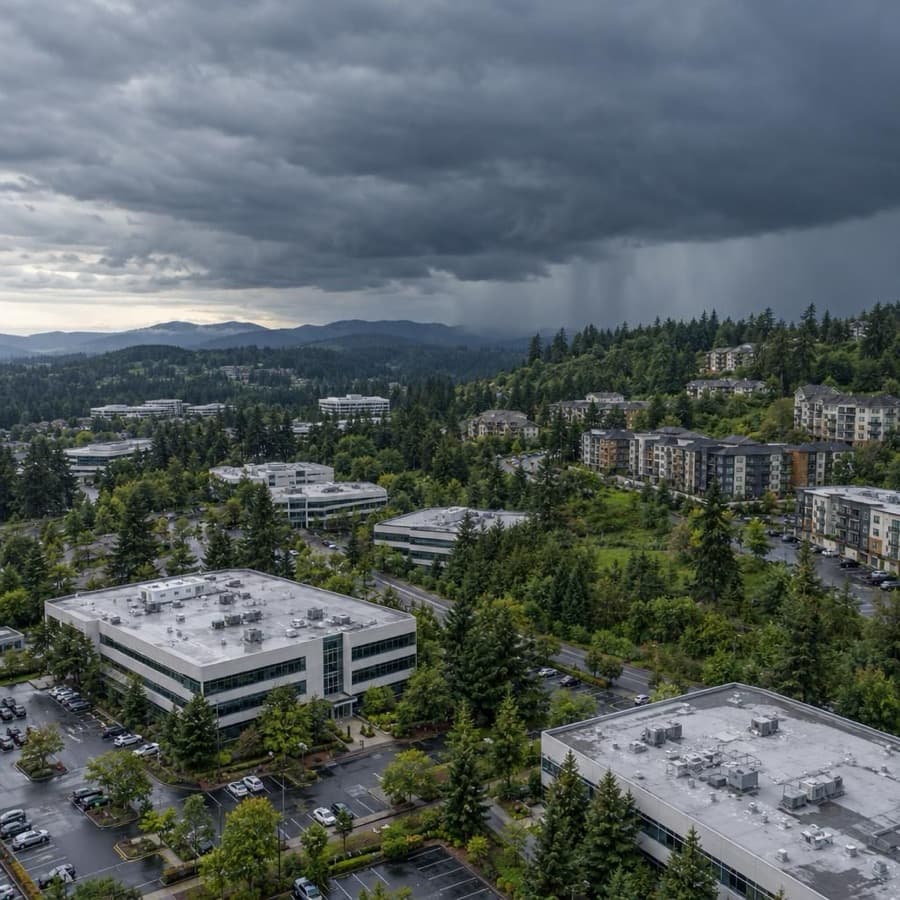
- Hail days near San Jose since 2010, the most in California
- 15
- Largest hail reported, near Merced
- 1.75 in
- California cities tracked
- 19
Source: NOAA/NWS Storm Prediction Center
Data through November 1, 2026
California cities by hail days
Source: NOAA/NWS Storm Prediction Center
Data through November 1, 2026
| City | Hail days since 2010 | Largest hail |
|---|---|---|
| San Jose | 15 | 0.75 in |
| Santa Cruz | 12 | 1.0 in |
| Santa Rosa | 10 | 0.25 in |
| Salinas | 6 | 1.0 in |
| San Diego | 5 | 0.75 in |
| Vallejo | 4 | 0.5 in |
| Visalia | 3 | 1.25 in |
| Merced | 3 | 1.75 in |
| Sacramento | 2 | 0.88 in |
| Modesto | 2 | 1.0 in |
| Los Angeles | 1 | 0.88 in |
| Fresno | 1 | 0.75 in |
| Bakersfield | 1 | 1.0 in |
| Stockton | 1 | 1.0 in |
| Riverside | 0 | No reports |
| San Francisco | 0 | No reports |
| Oxnard | 0 | No reports |
| Santa Maria | 0 | No reports |
| San Luis Obispo | 0 | No reports |
About this data
- Each city counts reports within 15 miles of its center, not of any one property.
- Reports come from trained spotters and the public, so they cluster near towns and roads.
- No report does not mean no hail. Hail can fall where no one is there to report it.
- This is not a damage or insurance assessment.
Storm risk in California
For commercial and multifamily buildings in California, the storm risks that matter most are wildfire spread by strong downslope winds, flooding from atmospheric rivers, and the wind itself; heavy snow matters in the mountains, and hail is rare and mostly small. Unlike the plains states, California was not among the ten states with the most large hail events in 2025, a list Texas led with 902, and none of the 19 California cities on this page has had more than 15 hail days since 2010.2,3,1
How often storms hit California
| Hazard | How often | What it means for buildings |
|---|---|---|
| Wildfire | 2020 set the record for area burned, with more than 8,600 wildfires burning over 4.3 million acres. The 2018 Camp Fire destroyed nearly 19,000 buildings, and the January 2025 Eaton and Palisades Fires destroyed more than 16,000 structures in Los Angeles County. | Embers carried ahead of a fire ignite roofs, vents, gutters and plants next to walls; the State Fire Marshal estimates 60 to 90 percent of home ignitions come from embers. |
| Damaging wind | Santa Ana winds in Southern California and Diablo winds in Northern California are the strong downslope winds tied to the most destructive wildfires. In November 2018, Diablo winds knocked over power lines in Butte County and helped spread the Camp Fire. | Gusts tear roof edges and coverings, topple trees and power lines, and drive fire into built-up areas. |
| Flooding | More than 7 million Californians, 1 in 5, live in the 500-year floodplain, and about $580 billion in crops, structures and public infrastructure is exposed to flooding. Flooding in the 2016 to 2017 winter caused more than $1 billion in losses. | Atmospheric rivers bring days of heavy rain and, in warm spells, fast snowmelt. Water and debris damage ground floors, basements, parking and site work. |
| Winter storms and snow | Some high-elevation locations get more than 400 inches of snow a year. In February and March 2023, storms dropped more than 100 inches of snow in the San Bernardino Mountains. | In mountain areas, FEMA says drifting and sliding snow piles into high, concentrated loads at parapets, roof steps and around rooftop equipment. |
| Hail | Rare. Hail days since 2010 within 15 miles of the city center: San Jose 15, Santa Cruz 12, Santa Rosa 10, San Diego 5, Los Angeles 1, San Francisco and Riverside 0. The largest stone near any of the 19 cities was 1.75 inches, near Merced. | Hail is seldom the main roof risk here, though repeat hail days near San Jose, Santa Cruz and Santa Rosa show it does fall. |
The city counts are days with at least one hail report within 15 miles of each city's center since 2010, so they show how often hail falls near a city, not on one building.1
For an owner in California, losses come less from frequent roof damage than from a few wind-driven fires and winter floods, and the two are linked: the state climate summary notes that fire strips slopes of vegetation, so the next heavy rain can bring debris flows and flooding.2
Rules owners in California should know
- FAIR Plan: The California FAIR Plan, an association of admitted insurers, provides basic property insurance for property that can't get it in the normal market. Its commercial property policies go up to $20 million per structure and $100 million per location in total.7
- Claim handling: Under the Fair Claims Settlement Practices Regulations, an insurer must acknowledge a claim and begin investigating within 15 calendar days of notice (10 CCR 2695.5), accept or deny it within 40 calendar days of proof of claim, with written notice every 30 days if it needs more time, and pay within 30 calendar days of accepting it (10 CCR 2695.7).8,9
- Suit deadline: The California standard fire policy bars a suit unless it starts within 12 months of the loss, or 24 months when the loss is related to a declared state of emergency (Insurance Code 2071). An insurer must give written notice of any time limit it may rely on at least 60 days before it expires, unless the claimant has a lawyer on the claim (10 CCR 2695.7(f)).10,9
- Appraisal after disasters: Either side may request appraisal of a disputed loss, but after a government-declared disaster it can't be compelled (Insurance Code 2071).10
- Replacement cost time: A policy can't allow less than 12 months from the first actual cash value payment to collect full replacement cost, or less than 36 months after a loss related to a state of emergency. After such a loss, an insurer also can't require proof of loss sooner than 100 days after it (Insurance Code 2051.5).11
- Defensible space: Anyone who owns, leases or operates a building in the state responsibility area must keep 100 feet of defensible space on each side, not past the property line, with the heaviest fuel reduction within 30 feet and an ember-resistant zone within 5 feet. The roof must be kept free of leaves and needles (Public Resources Code 4291).12
- Wildfire building code: New buildings whose permit applications came on or after July 1, 2008 must meet the California Wildland-Urban Interface Code if they sit in a fire hazard severity zone in the state responsibility area, or in a high or very high zone designated by a city or local agency. It sets standards for roofs, eaves, gutters, walls, vents, decks and glazing.5
- Wildfire discounts: Under 10 CCR 2644.9, a licensed insurer that rates personal or commercial property on wildfire risk must give a separate discount for each mandatory mitigation factor, and the Department of Insurance expects at least $1 off for each.13
Before the next storm
- Ember-resistant upgrades: The Department of Insurance's Safer from Wildfires steps include a Class A fire-rated roof, 1/16 to 1/8 inch metal mesh over vents, enclosed eaves and at least 6 inches of noncombustible material at the base of exterior walls, because embers cause most building ignitions.14,5
- Proof of mitigation: Keep records of each step taken. If an insurer requires inspections to verify mitigation, the Department says it must also offer a free option and must accept inspections by CAL FIRE or a local fire department.13
- Flood coverage dates: Check each building's flood coverage before the wet season, since FEMA says a new flood policy typically takes effect only after a 30-day wait.15
- After a nearby fire: Flood coverage bought within 60 days of a fire's containment date can start after 1 day when the flooding comes from federal land and is caused or worsened by post-wildfire conditions (44 CFR 61.11).16
Sources
Written by the Cloudbreak team. Numbers, dates and rules cite the published sources below.
- 1. Cloudbreak: NOAA/NWS Storm Prediction Center storm reports, as counted on the Cloudbreak hail history page for California
- 2. NOAA NCEI and North Carolina Institute for Climate Studies: California: 2025 State Climate Summaries
- 3. Insurance Information Institute: Facts + Statistics: Hail
- 4. California Department of Water Resources: Flood Planning and Studies
- 5. CAL FIRE Office of the State Fire Marshal: Building in the Wildland
- 6. FEMA: Snow Load Safety Guidance (FEMA P-957)
- 7. California Department of Insurance: FAIR Plan Stipulation and Order No. 2026-2 and Revised Plan of Operation
- 8. California Code of Regulations: 10 CCR 2695.5: Duties upon Receipt of Communications
- 9. California Code of Regulations: 10 CCR 2695.7: Standards for Prompt, Fair and Equitable Settlements
- 10. California Legislature: California Insurance Code Section 2071: California Standard Form Fire Insurance Policy
- 11. California Legislature: California Insurance Code Section 2051.5: Replacement cost measure of indemnity
- 12. California Legislature: California Public Resources Code Section 4291: Defensible space
- 13. California Department of Insurance: FAQ: Mitigation in Rating Plans and Wildfire Risk Models Regulation
- 14. California Department of Insurance: Safer from Wildfires
- 15. FEMA: Waiting Period for Activating Flood Policy?
- 16. Code of Federal Regulations (text via Cornell LII): 44 CFR 61.11: Effective date and time of coverage under the Standard Flood Insurance Policy
Storms in California
Thunderstorms in the Central Valley are most common in March and April and much less common in summer, and the northern Sacramento Valley sees them more often than the rest of the valley, an NWS Sacramento study found.1 In Southern California, cold winter storms can bring thunderstorms with hail, damaging winds and the occasional tornado, NWS San Diego says.2 From July through September, monsoon thunderstorms sometimes reach Southern California, mainly in the mountains and deserts, where downbursts can hit the ground with damaging force.2
Notable storms
- April 21, 2026Four tornadoes touched down across central California in one afternoon, tying the NWS Hanford office's one-day record. The strongest, west of Atwater, was rated EF1 with peak winds of 110 mph. The storm that produced a second EF1, northeast of Clovis, also dropped quarter-size hail.3
- August 22, 2020Hail up to 1.75 inches across piled several inches deep on Interstate 15 at Mountain Pass in San Bernardino County and broke vehicle windshields. NOAA's Storm Events Database lists $250,000 in property damage.4
- May 24, 2019Hail up to 3 inches across fell in the Redding area. Many cars were dented or had windshields and back windows broken, and NOAA's Storm Events Database cites a local TV estimate of up to 3,000 damaged cars.5
- January 23, 2016Spiked hailstones up to 3 inches across fell on open grassland near Rawson in Tehama County, tying California's record for the largest hail, set in San Diego County in 1960. No damage was reported.6
- August 6, 2015A brief EF1 tornado near Mecca in the Coachella Valley damaged 140 power poles along a path about 3.5 miles long. NOAA's Storm Events Database lists $18 million in property damage and 2 injuries.7
Warnings and alerts
NWS lists 10 forecast offices for California: Eureka, Sacramento, San Francisco, Hanford, Los Angeles/Oxnard and San Diego, plus Medford, Reno, Las Vegas and Phoenix.8 Each California county has its own emergency alert sign-up, and Cal OES lists them by county at CalAlerts.org.9
Sources
- 1. NWS Sacramento: The Northern Sacramento Valley Surface Moisture Convergence Zone (Western Region Technical Attachment 02-07)
- 2. NWS San Diego: The Weather Guide
- 3. NWS Hanford: April 21, 2026 Central Valley Tornadoes
- 4. NOAA NCEI: Storm Events Database: San Bernardino County hail, August 22, 2020
- 5. NOAA NCEI: Storm Events Database: Shasta County hail, May 24, 2019
- 6. NOAA NCEI: Storm Events Database: Tehama County hail near Rawson, January 23, 2016
- 7. NOAA NCEI: Storm Events Database: Riverside County tornado near Mecca, August 6, 2015
- 8. National Weather Service: California Forecast
- 9. California Governor's Office of Emergency Services: How To Sign Up For Alerts In Your County
Hail history in other states
- Alabama
- Alaska
- Arizona
- Arkansas
- Colorado
- Connecticut
- District of Columbia
- Florida
- Georgia
- Hawaii
- Idaho
- Illinois
- Indiana
- Iowa
- Kansas
- Kentucky
- Louisiana
- Maine
- Maryland
- Massachusetts
- Michigan
- Minnesota
- Mississippi
- Missouri
- Montana
- Nebraska
- Nevada
- New Hampshire
- New Jersey
- New Mexico
- New York
- North Carolina
- North Dakota
- Ohio
- Oklahoma
- Oregon
- Pennsylvania
- Rhode Island
- South Carolina
- South Dakota
- Tennessee
- Texas
- Utah
- Virginia
- Washington
- West Virginia
- Wisconsin
- Wyoming