Pre-loss inspection
Inspection · Cloudbreak team · Updated October 29, 2026 · 10 sources
Definition
A pre-loss inspection documents a property's condition in writing and photos before a storm or other loss. It exists for comparison: later inspections, including one after a storm, check what changed against the record on file.
How it works
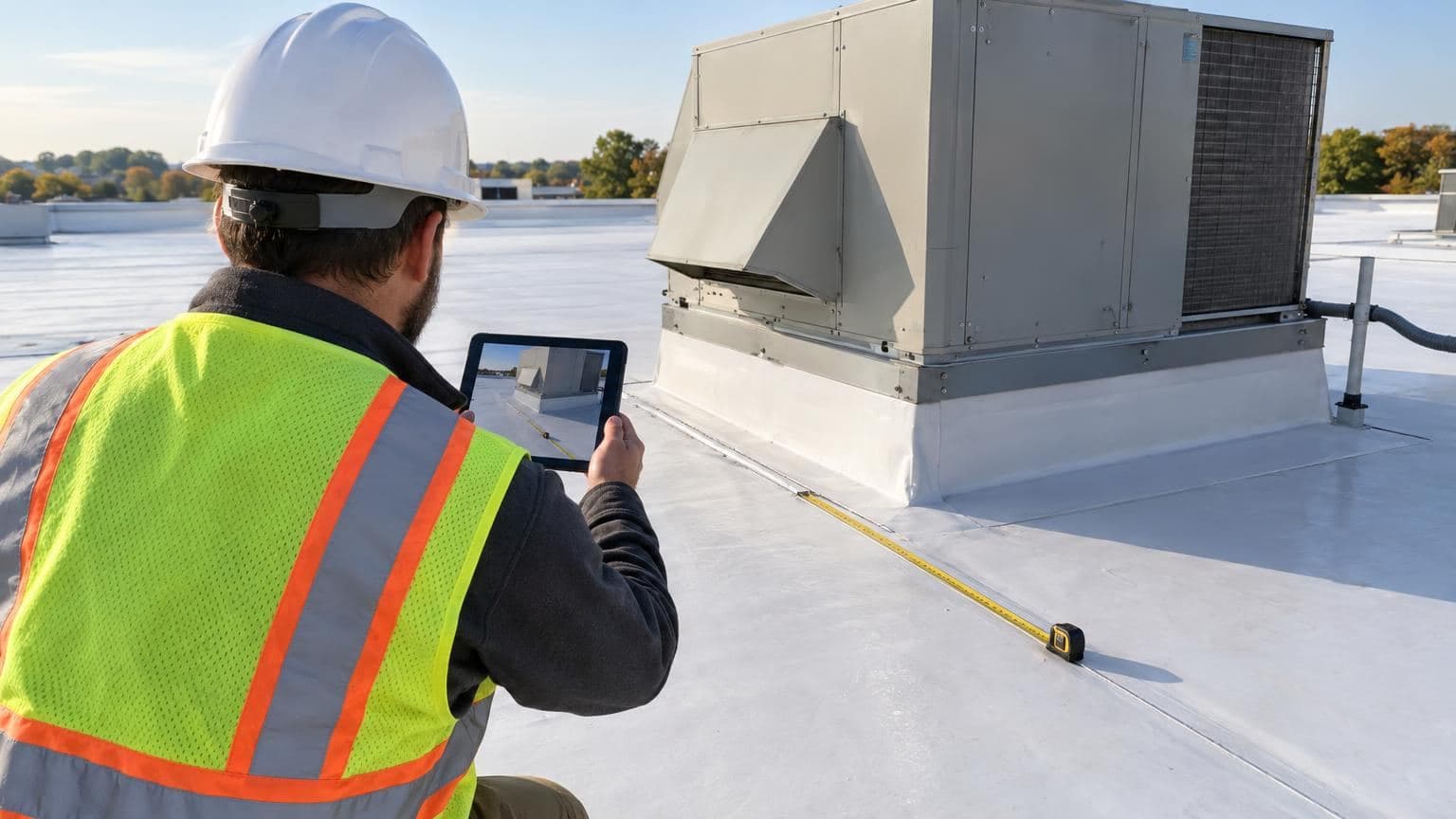
The inspection sets a baseline. An inspector walks the roof and the building's exterior and records what is there and what shape it is in, with photos tied to dated notes. After a storm, a new inspection is compared with that record: anything that was sound before and is damaged now points to the storm, and anything already in the record does not.
This matters because most property policies exclude wear and tear, and a storm and years of weather can leave similar marks. Without a record from before, the line between them often has to be drawn after the fact from the damage alone.
The roof survey protocol published by IBHS and RICOWI lists what a survey records: roofing materials and how weathered they are, seams and seals, edge flashing, the number of penetrations and drains, skylights and roof-mounted equipment, with photos tied to notes. The survey captures conditions at that point in time and compares them with earlier records when they exist. Before the survey, the protocol also pulls building permit history and asks owners for the roof covering's age, maintenance history, warranty information and how it performed in earlier weather events.1
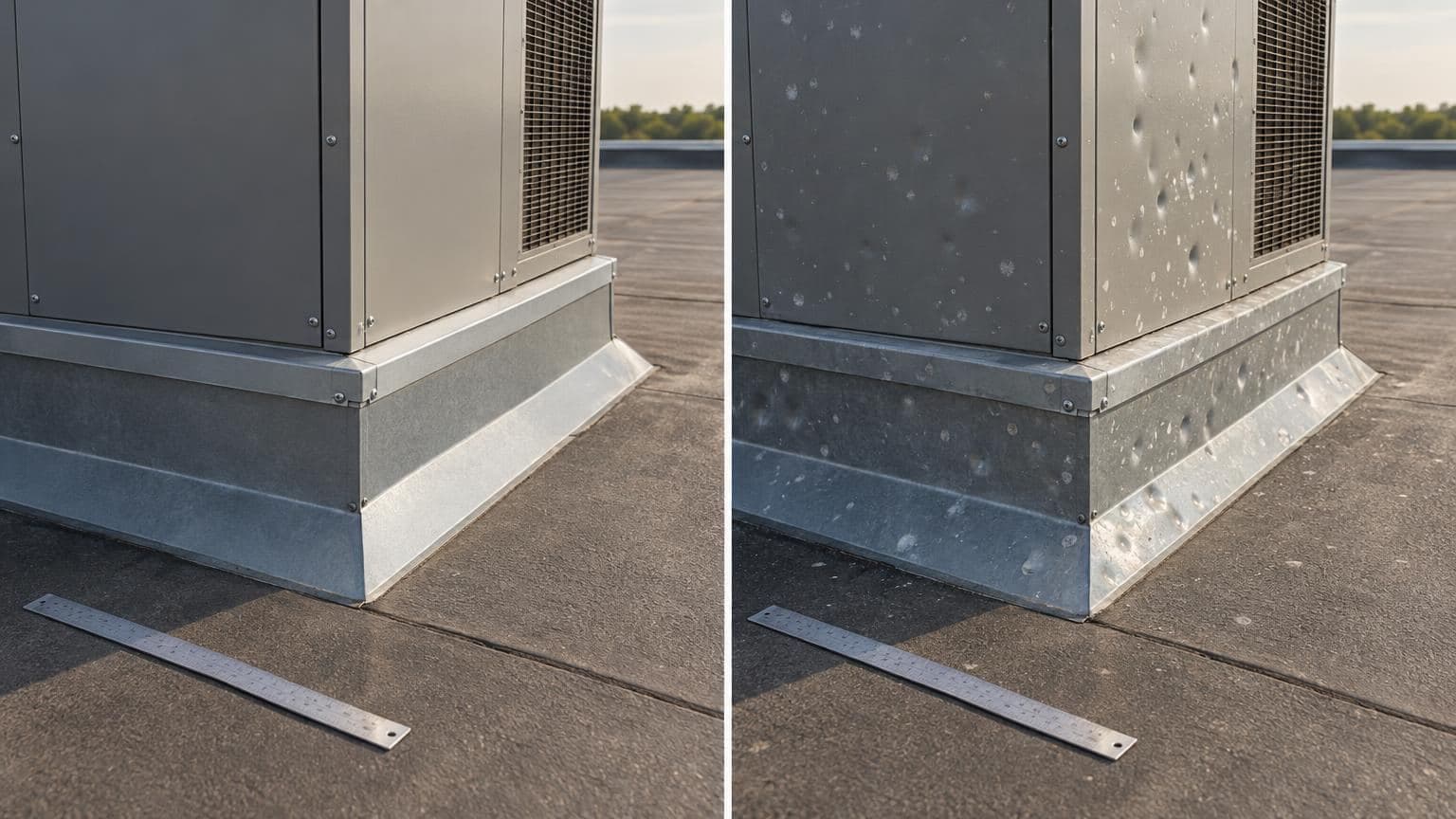
After a storm, investigators sometimes must separate new damage from old. Forensic engineers writing for a November 2022 ASCE congress call site evidence the most reliable hail data. But burnish (spatter) marks, the best evidence of recent hail, fade with weathering at rates that vary by surface. After the May 24, 2011 Dallas/Fort Worth hailstorm, RICOWI found hail fractures had little oxidation or grime, unlike weathering cracks.2,3
Condition also changes what a storm does. FM Data Sheet 1-34 (March 2018, revised April 2026) says roofs with deterioration, scrim showing, blisters, alligatoring, cracks or embrittlement are very susceptible to even small hail. It shows a 20-year-old alligatored built-up roof damaged by 1-inch hail.4
Example
A 2022 forensic case shows how dated records narrow a date of loss. At a site with 18 metal buildings, aerial imagery showed Buildings 1 to 11 were built by November 28, 2003 and Buildings 12 to 18 on or after September 27, 2005. Only Buildings 1 to 11 had hail dents, so the engineers placed the damaging hail between 2003 and 2005. Weather data showed two hail events nearby in spring 2005, and 13 years later the engineers could not tell which caused the dents.2
A pre-loss inspection does the same job by design. With the spring and fall inspections NRCA recommends, a written, photographed record is usually no more than about 6 months old when a storm hits. A roof photographed without dents in March and found dented after a May hailstorm, for example, places the dents between the two dates.5
Where you'll see it
- Claim files, where photos and documents from before the damage are compared with the adjuster's findings and weather reports.
- Roof maintenance files: NRCA recommends inspections at least twice a year, preferably spring and fall, plus after a hurricane, tornado or hailstorm, written up, photographed and filed.5
Pre-loss inspection vs property condition assessment
| Pre-loss inspection | Property condition assessment (ASTM E2018-24) | |
|---|---|---|
| Purpose | A record to compare against at later inspections or after a loss | Identify material physical deficiencies at commercial real estate |
| Method | Written, photographed inspection of the roof, adjacent walls and rooftop equipment | Walk-through survey, document review and interviews |
| Coverage | Roof materials, seams, penetrations and drains (counted) and roof-mounted equipment | Representative observations; similar buildings need not each be observed |
| Reliance | Filed and compared at later inspections | Only for the point in time of the survey; typically for the contracting parties |
ASTM says a property condition assessment is not technically exhaustive: it reduces, but does not eliminate, uncertainty about physical deficiencies.6
State rules
- Texas, wear and tear: the Texas Department of Insurance (TDI) commercial property guide says most special form policies exclude wear and tear, and its roof guide says insurers won't pay for a new roof just because it is old or worn out.7,8
- Texas, TWIA claims: in an August 5, 2024 Hurricane Beryl webinar, the Texas Windstorm Insurance Association (TWIA) asked policyholders for any property documentation and photos taken before the damage. Its claims examiners review weather reports alongside the field adjuster's report.9,10
Questions
- What is the difference between a pre-loss inspection and a property condition assessment?
- A property condition assessment under ASTM E2018 identifies material physical deficiencies at commercial real estate using representative observations, and is meant to be relied on only for its point in time. A pre-loss inspection documents roof conditions so they can be compared after a storm.6,1
- How often should a commercial roof be inspected?
- NRCA recommends at least twice a year, preferably in spring and fall, plus after severe weather such as a hurricane, tornado or hailstorm, with conditions written down, photographed and filed.5
- Can hail damage be dated without a pre-loss inspection?
- Sometimes. Engineers combine weather reports with burnish marks, dents and the ages of buildings and equipment, but burnish marks fade, and spotter reports rarely come from the site under investigation.2

Cloudbreak
Cloudbreak's certified inspection partners record every roof section, elevation and exterior item before a loss, with an exception list for anything not captured. Before a purchase, the due diligence inspection covers storm risk, roof life and insurance cost.
Sources
Written by the Cloudbreak team. Numbers, dates and rules cite the published sources below.
- 1. Insurance Institute for Business and Home Safety (IBHS): RICOWI Roof Guide: Survey Practices
- 2. ASCE Forensic Engineering 9th Congress: Dating Hail: Investigation and Determination of the Date of Occurrence of Hail Impact Damage (Verhulst, Bosley and Donaldson, November 2022)
- 3. RICOWI: Hailstorm Investigation Report: Dallas/Fort Worth, TX, May 24, 2011 (published May 2012)
- 4. FM Global: Property Loss Prevention Data Sheet 1-34: Hail Damage (March 2018 edition, interim revision April 2026)
- 5. Professional Roofing, NRCA: The benefits of maintenance (Mark S. Graham, April 2012)
- 6. ASTM International: E2018-24 Standard Guide for Property Condition Assessments: Baseline Property Condition Assessment Process
- 7. Texas Department of Insurance: Commercial property insurance guide (updated December 9, 2025)
- 8. Texas Department of Insurance: Insurance and your roof: What to know when buying a policy or filing a claim (updated April 1, 2026)
- 9. Texas Windstorm Insurance Association: How a TWIA Claim Works, Part 2: Webinar for Policyholders Impacted by Hurricane Beryl (August 5, 2024)
- 10. Texas Windstorm Insurance Association: Claims Process