Commercial roof inspection
Inspection · Cloudbreak team · Updated October 29, 2026 · 8 sources
Definition
A commercial roof inspection is a visual check of a roof system, the walls next to it and any rooftop equipment that can affect watertightness. What the inspector finds is written down and photographed, and each report becomes the baseline the next one is compared against.
How it works
There are two kinds of inspection: routine maintenance inspections on a set schedule, and extra inspections after severe weather. Routine visits catch slow problems such as clogged drains, open seams and aging flashing. Post-storm visits look for new damage while it can still be tied to the storm.
NRCA recommends maintenance inspections at least twice a year, preferably in spring and fall, plus extra inspections after severe weather such as a hurricane, tornado or hailstorm.1
Building staff can do the inspection if they have general knowledge of the roof system and follow proper safety procedures; otherwise, NRCA says to retain a professional roofing contractor. Owner maintenance covers jobs like clearing debris and trimming overhanging branches. For repairs beyond that, NRCA recommends a roofing contractor, and on a roof under warranty, the installing contractor, to avoid conflicts with the warranty terms.1
What gets checked
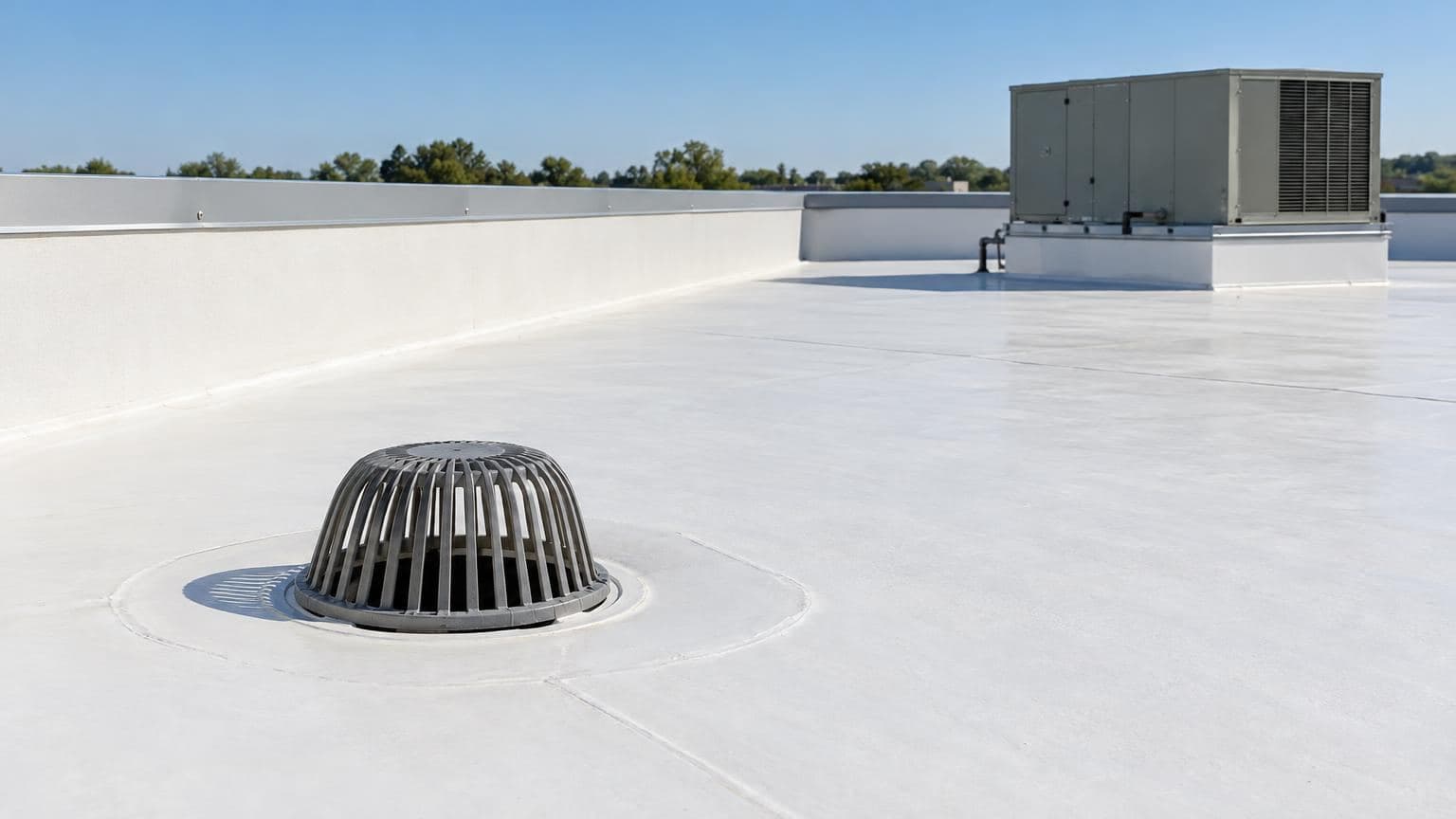
A low-slope roof system has many parts that can fail: framing, connectors and fasteners, deck, insulation, covering, edges and overhangs, parapet walls, vents, drainage, openings and roof-mounted equipment. FEMA defines low slope as less than 3:12 for metal roofs, 2.5:12 for clay tile and 2:12 for ballasted roofs.2
- Roof surface: debris, ponding water, new equipment or alterations.
- Membrane: blisters, fishmouths, alligatoring, splits, ridging, loose laps, bare spots in gravel or coating, and fasteners.
- Flashing and roof edge: rust, open laps, attachment to walls and curbs, popped fasteners, and how well fascia and gravel stops are secured.
- Parapet walls: mortar joints, cracks, spalling, coping and caulking.
- Insulation: soft or spongy areas from water, checked with a non-destructive moisture survey or test cuts and cores.
- Deck underside: rust or rot, sagging, cracks and water entry, with ceilings checked for leaks and stains.
- Drains, gutters, scuppers and downspouts: clogging and damming. The IBHS and RICOWI survey protocol counts every drain and penetration.3,4
- Penetrations and equipment: pitch pans, equipment supports and curbs, rooftop units, skylights, hatches and walkways.
Example
Under NRCA's schedule, an example building is inspected in April and October, and again after a June hailstorm. Each report is filed and can be compared with the one before it.1
| Inspection | When | Compared against |
|---|---|---|
| Spring maintenance | April | Previous October report |
| Post-storm | After the June hailstorm | April report, about 2 months old |
| Fall maintenance | October | June report |
Standing water has a benchmark too. NRCA's glossary defines positive drainage as a design condition in which roof slope ensures the roof drains within 48 hours of rain, in conditions conducive to drying. If rain stops at 6 p.m. Monday on an example roof, water still standing at 6 p.m. Wednesday is past that 48-hour mark. Virginia's checklist marks ponding on the roof plan.4,5
After a storm
A post-storm inspection looks for signs that tie damage to the storm. The IBHS and RICOWI survey protocol checks hail spatter marks and dents for size and direction, and compares damaged materials with undamaged ones. NRCA's hail repair sheet says checking thin aluminum fixtures helps confirm hail impact. On low-slope roofs, hail usually damages base flashing before other parts of the roof.3,6,7
Some damage is hard to see from above. In thermoplastic membranes such as PVC and TPO, hail fractures show right away on the underside and under strong backlight, but water, snow or ice on the membrane can hide them completely.6
Where you'll see it
- Maintenance files: Virginia's Department of General Services publishes a semi-annual roof inspection checklist for existing buildings. It is used with a roof plan that marks interior leaks and ponding, and close-up photos are kept as a permanent record.4
- Underwriting: the Insurance Information Institute says most insurers require a roof over 20 years old to pass an inspection when someone applies for home or business insurance, and some cover an older roof only at actual cash value.8
Questions
- How often should a commercial roof be inspected?
- NRCA recommends at least twice a year, preferably spring and fall, plus after severe weather such as a hurricane, tornado or hailstorm.1
- What is checked during a commercial roof inspection?
- The membrane, flashing, roof edges, parapets, insulation, deck underside, drains and gutters, and every penetration and piece of rooftop equipment, with conditions written down and photographed.
- How long can water stand on a flat roof?
- NRCA's glossary defines positive drainage as roof slope designed so the roof drains within 48 hours of rain, during conditions conducive to drying.5
- Can building maintenance staff inspect a commercial roof?
- Yes. NRCA says staff with general knowledge of the roof system who follow proper safety procedures can inspect it, and recommends a professional roofing contractor for repairs beyond owner maintenance.1
Cloudbreak
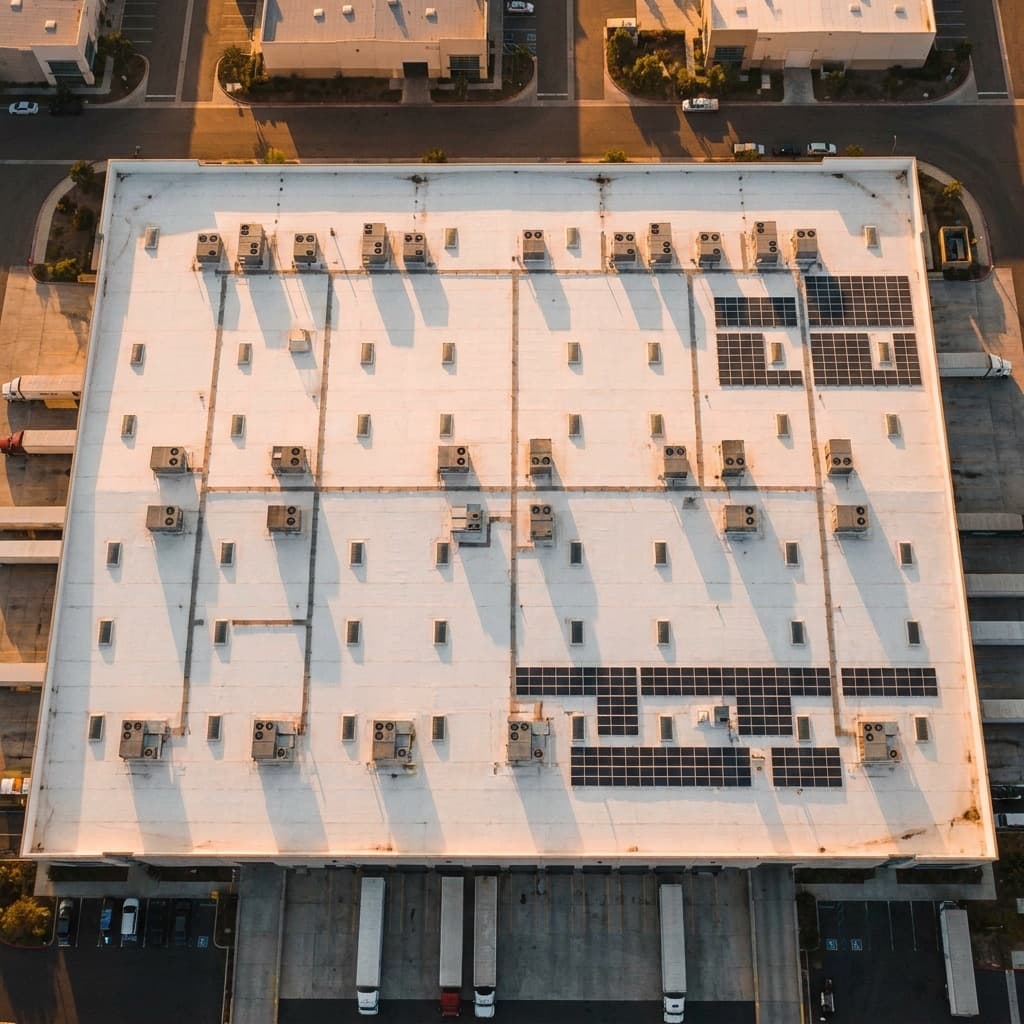
Cloudbreak's certified inspection partners record every roof section, elevation and exterior item before a loss, with an exception list for anything not captured. Before a purchase, the due diligence inspection covers storm risk, roof life and insurance cost.
Sources
Written by the Cloudbreak team. Numbers, dates and rules cite the published sources below.
- 1. Professional Roofing, NRCA: The benefits of maintenance (Mark S. Graham, April 2012)
- 2. Federal Emergency Management Agency: FEMA P-2181 Fact Sheet 3.3.2: Roof Systems, Low-Slope Roofs (March 2022)
- 3. Insurance Institute for Business and Home Safety (IBHS): RICOWI Roof Guide: Survey Practices
- 4. Virginia Department of General Services: Semi-Annual Roof Inspection Maintenance Checklist for Existing Buildings, Low Roofing/Flashing (DGS-30-348)
- 5. National Roofing Contractors Association (NRCA): Glossary: Positive drainage
- 6. Professional Roofing, NRCA: Holy hail! Learn how to identify hail damage on low-slope roof systems (Scott J. Morrison, June 2009)
- 7. National Roofing Contractors Association (NRCA): Roof Repair After a Hailstorm
- 8. Insurance Information Institute (Triple-I): How Your Roof Influences Your Home and Business Insurance