0 of 30 done
Before the season
Flooding can reach buildings outside high-risk flood zones, so check the real risk.
A lowest floor below the base flood elevation is more likely to take on water.
Storm surge can reach well inland, and local emergency management sets the zones.
Damaged property usually has to be itemized for the insurer, which is easier with photos taken before.
Paper files on site can be lost in the storm, and you need the policy details to report a claim.
Power and phones may be out, so keep the list on a phone and offsite.
Time-sensitive decisions go faster when one person owns them.
Power and phone service can fail; use NHC, the local NWS office, a NOAA weather radio and phone alerts.
Roof and rooftop equipment
IBHS recommends this schedule; a roof in poor repair is more likely to fail in high winds.5
A loose roof edge lets wind get under the roof cover; also look for rust and wavy or unattached fascia.
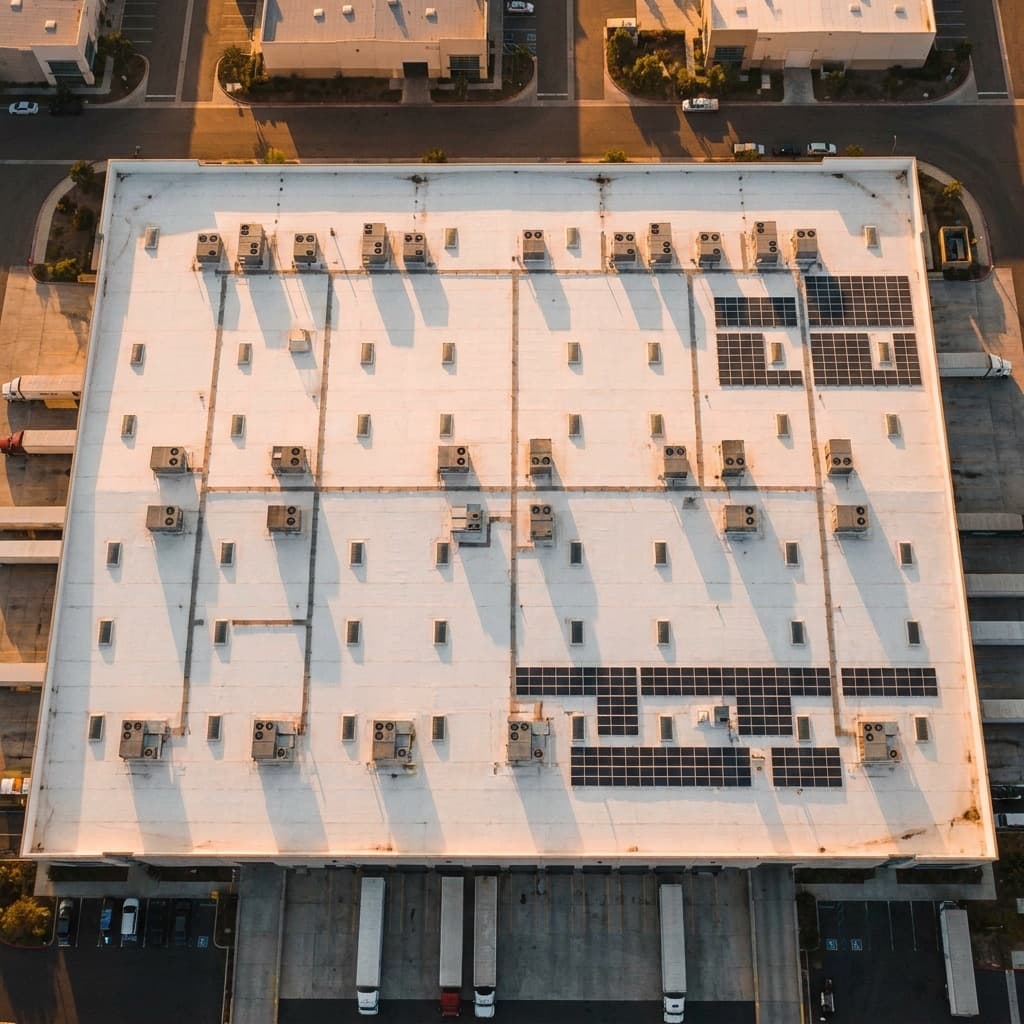
Loose units can slide or blow off in high winds and damage the roof.
Panels that blow off can tear the roof membrane.
Water that cannot drain off the roof and away from the building can leak inside.5
Branches can damage the roof and clog drains.
Windows, doors and site
Wind-driven rain gets in through any unsealed gap; leave storefront weep holes open.
A large door that fails lets wind in, and the pressure pushes up on the roof.
IBHS says units are usually tilted 2 degrees outward to shed wind-driven rain, and leaks cause costly damage.3
Power often fails in a hurricane, and pumps without battery backup stop with it.
Generators and fuel are hard to get once a storm is on the way.
FEMA's Ready Business toolkit measures from the base or design flood elevation, whichever is higher.6
When a hurricane watch is issued
The National Hurricane Center issues the watch 48 hours before tropical-storm-force winds, and outdoor work may be too dangerous once they arrive.3,2
Buckets, lumber and sheet metal left on a roof become debris, and blocked drains hold water on the roof.
FEMA recommends truck cargo straps over units of unknown strength to keep them from blowing off.7
Loose objects become flying debris that can hit this building and its neighbors.
IBHS says taping windows provides no protection and wastes time.3
An open door lets wind inside; a door that is not wind-rated can be braced.
Blocked drains at loading docks can let water into the building.
People and the warning
Some residents may need help to prepare or to leave.
The National Hurricane Center issues the warning 36 hours before tropical-storm-force winds, and the National Weather Service says all preparations should be complete by then.2
Local officials decide who must leave; go right away if told to.
General guidance, not legal advice. Follow local officials during a storm.
Watches, warnings and lead times
| Alert | Meaning | Timing |
|---|---|---|
| Tropical storm watch | 39 to 73 mph possible | Within 48 hours |
| Tropical storm warning | 39 to 73 mph expected | Within 36 hours |
| Hurricane watch | 74 mph or more possible | 48 hours before tropical-storm-force winds |
| Hurricane warning | 74 mph or more expected | 36 hours before tropical-storm-force winds |
| Storm surge watch | Life-threatening inundation possible | Generally within 48 hours |
| Storm surge warning | Danger of life-threatening inundation | Generally within 36 hours |
| Extreme wind warning | 115 mph or more, usually the eyewall | Within the hour |
Once coastal watches or warnings are in effect, the National Hurricane Center issues public advisories every 3 hours. The center of the storm stays inside the forecast cone about 60 to 70 percent of the time, and areas well outside it often get tornadoes or inland flooding.2
Questions
- What is the difference between a hurricane watch and a hurricane warning?
- A watch means sustained winds of 74 mph or more are possible and comes 48 hours before tropical-storm-force winds. A warning means they are expected and comes 36 hours before, when all preparations should be complete.2
- How do I prepare a commercial building for a hurricane?
- Before the season, check flood and surge exposure, inspect the roof, edge flashing and rooftop unit straps, seal openings and photograph the property. At the watch, clear the roof, strap HVAC units, secure outdoor items and put up shutters.
- Does taping windows help in a hurricane?
- No. IBHS says taping windows provides no protection and wastes time. Use shutters, with plywood at least 3/4 inch thick only as a last resort.3
- When does a new flood insurance policy start?
- NFIP coverage usually takes effect 30 days after purchase, with some exceptions such as a purchase tied to a mortgage. NFIP commercial policies cover up to $500,000 each for building and contents.4
Cloudbreak
Cloudbreak's proprietary predictive storm engine, built with AI and backed by meteorologists, tracks every storm against every building, before it hits and after it passes.
Sources
Checks are kept in this browser only and sent nowhere. Each item is from the published sources below.
- 1. Ready.gov, Federal Emergency Management Agency: Hurricanes
- 2. National Weather Service: Hurricane and Tropical Storm Watches, Warnings, Advisories and Outlooks
- 3. Insurance Institute for Business & Home Safety: Hurricane Ready, Business (IBHS21V1)
- 4. FloodSmart, National Flood Insurance Program: What you need to know about buying flood insurance
- 5. Insurance Institute for Business & Home Safety (copy hosted by ICAT): Make Your Business Hurricane Ready: Prepare Your Business Annually Before Hurricane Season
- 6. Ready.gov, Federal Emergency Management Agency: Ready Business Hurricane Toolkit
- 7. FEMA Building Science Branch (copy hosted by the Virgin Islands Territorial Emergency Management Agency): Attachment of Rooftop Equipment in High-Wind Regions, Hurricanes Irma and Maria in the U.S. Virgin Islands, Recovery Advisory 2 (March 2018)