Reserve study
Inspection · Cloudbreak team · Updated October 29, 2026 · 6 sources
Definition
A reserve study is a budget planning tool that identifies the components a community association must maintain or replace, the status of its reserve fund, and a stable funding plan for future major repairs and replacements.1
How it works
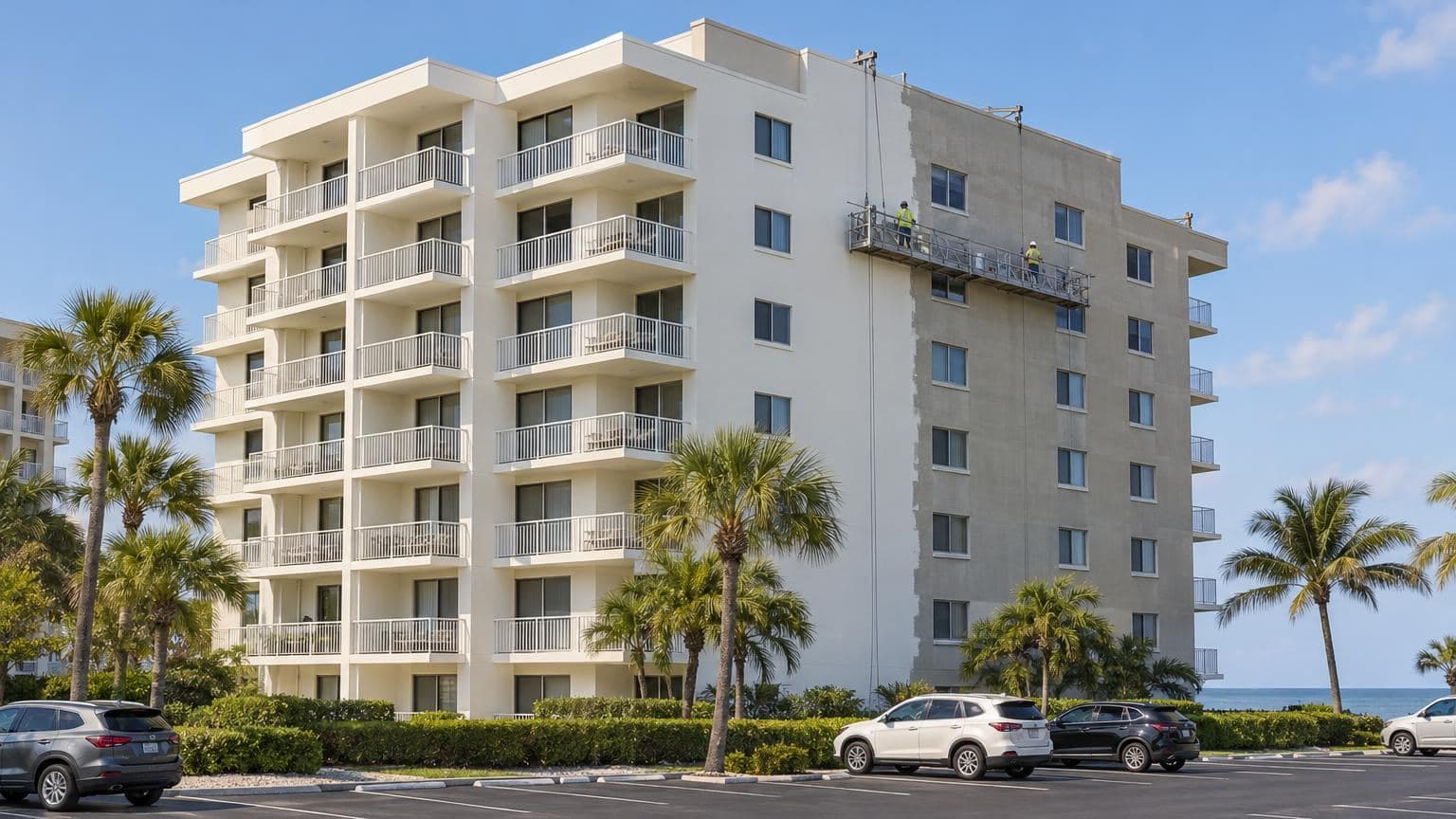
A reserve study has two halves. The physical analysis lists the major shared components, such as roofs, paving, elevators and exterior paint, judges their condition, and estimates how long each has left and what it will cost to replace. The financial analysis compares the reserve fund with the wear that has built up so far and sets yearly contributions that will cover the work when it comes due, without a special assessment or loan.
Under CAI's Reserve Study Standards, a full study (Level I) has five tasks: component inventory, condition assessment, life and valuation estimates, fund status and funding plan. A Level II update with a site visit repeats all five but only checks that earlier quantities generally match what is built. A Level III update without a site visit covers the last three. A Level IV preliminary study is made from design documents before construction.2,1
A component is included only if the association must maintain or replace it, the need and timing can be reasonably anticipated, and the cost is material and can be reasonably estimated, counting all direct and related costs. Costs use current-year prices for materials, labor, engineering, permits and disposal, and the study shows at least 30 years of income and expenses.1,3
The condition assessment is visual and non-invasive, with no destructive testing. Design review, construction evaluation and structural evaluation fall outside a reserve study. CAI's explanation of the standards also places insurable losses outside both reserve and operating expenses.1,3
Fund status is often stated as percent funded: the reserve balance divided by the fully funded balance. Each component's fully funded balance is its current cost times its effective age divided by its useful life. The funding plan then aims at one of three goals: baseline (the balance never falls below zero, the riskiest goal), threshold (stay above a set dollar amount or percent funded) or full (at or near 100% funded).1,3
Example
CAI's explanation works through an 8-component sample. The roof costs $80,000, lasts 20 years and has 18 left, so its fully funded balance is $80,000 x 2 / 20 = $8,000.3
| Component | Useful life / remaining (years) | Current cost | FFB |
|---|---|---|---|
| Pool furniture, replace | 5 / 0 | $4,600 | $4,600 |
| Pool, resurface | 10 / 5 | $10,000 | $5,000 |
| Roof, replace | 20 / 18 | $80,000 | $8,000 |
| Asphalt, seal | 5 / 2 | $5,000 | $3,000 |
| Asphalt, resurface | 20 / 2 | $25,000 | $22,500 |
| Building, repaint | 10 / 1 | $50,000 | $45,000 |
| Elevator, modernize | 20 / 5 | $80,000 | $60,000 |
| Hallways, refurbish | 8 / 6 | $24,000 | $6,000 |
| Total | $278,600 | $154,100 |
The sample association holds $76,450 in reserves, so it is $76,450 / $154,100, or 49.6% funded.3
CAI then funds the same list two ways, leaving out interest and inflation. The component method funds each item separately until its next replacement. The roof needs $80,000 over 18 years, or $4,444 a year, and the elevator $80,000 over 5 years, or $16,000 a year; the full list needs $33,904 a year. The cash flow method tests one flat contribution against projected spending. At $21,500 a year, the balance stays above a year's funding through the 8 years shown, with a low of $23,750 at the end of year 6, after $94,600 of pool, furniture and elevator work in year 5.3
- Component method$33,904
- Cash flow method$21,500
- Total$55,404
Where you'll see it
- Condo mortgages: Fannie Mae's Full Review requires a budget that funds replacement reserves of at least 10% of budgeted assessment income. A lender may rely on a reserve study instead, but the budget must then carry the study's highest recommended allocation, and a baseline funding plan cannot waive the 10% rule.4
- Lender rule change: for loan applications dated on or after August 3, 2026, Fannie Mae's FAQs say lenders using a reserve study in place of the 10% rule cannot use the baseline method to judge reserve adequacy.5
State rules
- Florida condominiums: every residential condo building of 3 or more habitable stories needs a structural integrity reserve study (SIRS) at least every 10 years. It covers roof, structural systems, fireproofing and fire protection, plumbing, electrical, waterproofing and exterior painting, windows and exterior doors, and other items over $25,000 that affect the building's structure.6
- Florida SIRS deadlines and filing: owner-controlled associations existing on or before July 1, 2022 had until December 31, 2025. Within 45 days of completion, the association must notify owners and file a reporting form with the Division of Condominiums, Timeshares and Mobile Homes.6
Questions
- What is included in a reserve study?
- Under CAI's standards, a full study includes a component inventory, condition assessment, life and valuation estimates, fund status and a funding plan.1
- How often should a reserve study be updated?
- CAI's standards call for regular updates and name an update with a site inspection at least every third year as best practice. Florida requires a structural integrity reserve study at least every 10 years for condo buildings of 3 or more habitable stories.1,6
- What does percent funded mean?
- It is the reserve balance divided by the fully funded balance, which is the value of the components' deterioration to date. CAI notes it measures fund size, not whether the funding plan is adequate.3
- What is the difference between a reserve study and a milestone inspection?
- In Florida, the condo division describes a milestone inspection as a structural inspection of an aging building for substantial structural deterioration, due at 30 years of age (25 where the local building agency requires it) and every 10 years after. A structural integrity reserve study is a type of reserve study: a budget plan for future major repairs and replacement of structural elements.6

Cloudbreak
Cloudbreak's certified inspection partners record every roof section, elevation and exterior item before a loss, with an exception list for anything not captured. Before a purchase, the due diligence inspection covers storm risk, roof life and insurance cost.
Sources
Written by the Cloudbreak team. Numbers, dates and rules cite the published sources below.
- 1. Community Associations Institute: Reserve Study Standards (2023)
- 2. Community Associations Institute: Reserve Study and Funding Public Policy
- 3. Community Associations Institute: An Explanation of CAI's Reserve Study Standards (Browning, Frumkin, Miller and Nordlund, 2025)
- 4. Fannie Mae: Selling Guide B4-2.2-02: Full Review Process
- 5. Fannie Mae: Project Standards Requirements FAQs (August 2026)
- 6. Florida Department of Business and Professional Regulation, Division of Condominiums, Timeshares and Mobile Homes: Inspections: Milestone Inspections and Structural Integrity Reserve Studies