Blanket insurance
Coverage · Cloudbreak team · Updated October 29, 2026 · 7 sources
Definition
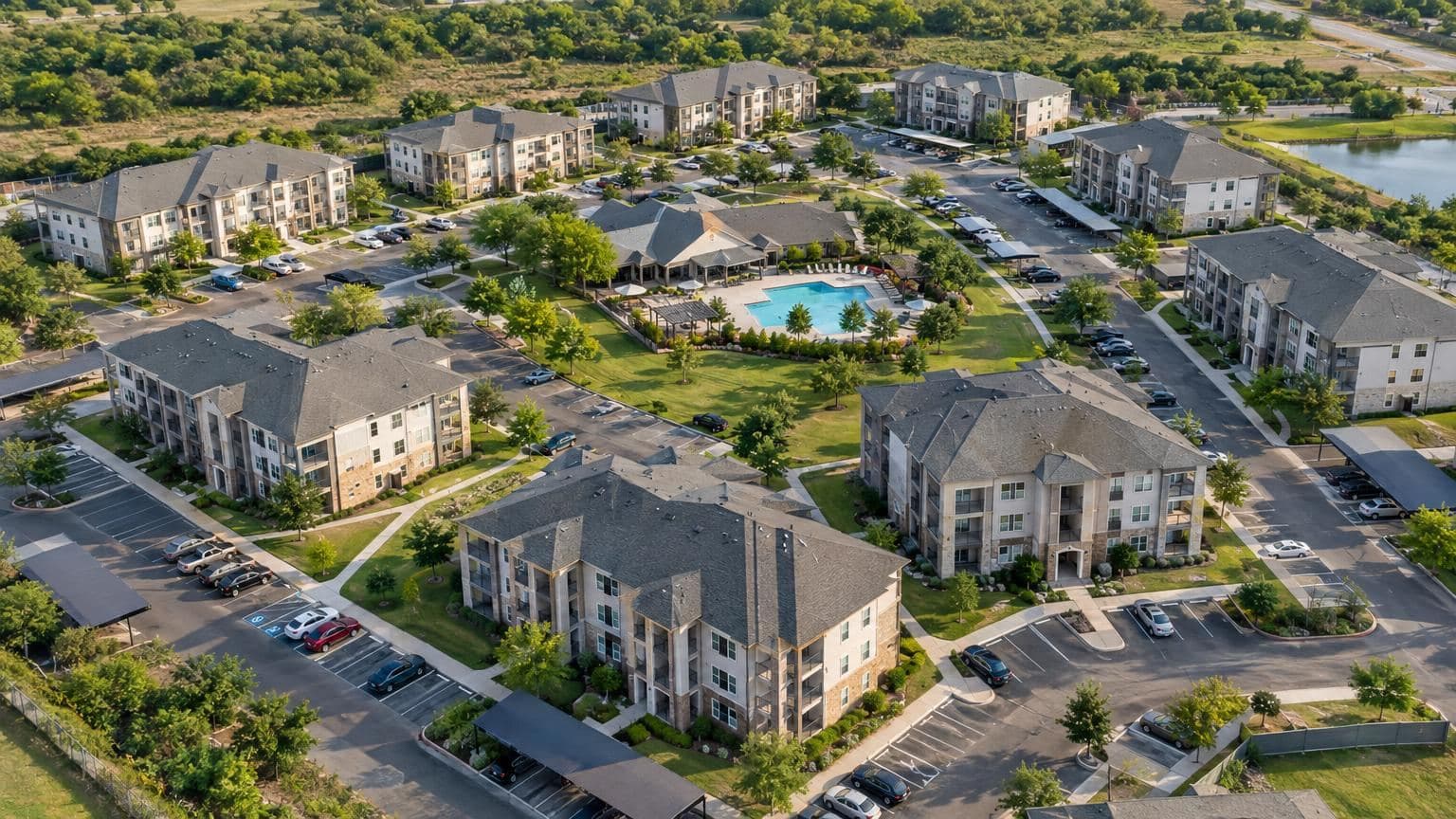
Blanket insurance puts two or more items of property under a single limit of insurance: several buildings, a building and its contents, or the contents of several locations. Specific, or scheduled, insurance gives each item its own limit instead.1
How it works
With one shared limit, a large loss at one building can draw on more than that building's share of the total, as long as it stays within the blanket limit and any per-location cap. Under specific insurance, each building can collect only up to its own limit, even when the others are undamaged.
Because the limit is shared, the values behind it are combined too. Where the policy has a coinsurance requirement, it is measured against the total value of everything under the blanket, so the reported value of every building counts.
Deductibles do not have to follow the blanket. A deductible, and a percentage wind or hail deductible in particular, can still be figured separately for each damaged building.
Many blanket policies add a margin clause or another per-location limit. It caps what one location can collect at a set percentage of its reported values, normally above 100 percent, such as 110 or 125 percent. In effect it turns the blanket into a set of per-location limits with some room above each value.2
How the standard ISO forms apply it
ISO's margin clause endorsement (CP 12 32, June 2007 edition) lists four kinds of blanket limit: two or more buildings, a building and its contents, the contents of more than one building, or contents at more than one premises. CP 12 32 also states that the margin clause does not increase the blanket limit.3
In the CP 12 32 examples, coinsurance is figured on the combined value of the buildings under the blanket: three buildings worth $5,000,000 together need a $4,500,000 blanket limit to meet 90% coinsurance.3
Under ISO's Windstorm or Hail Percentage Deductible (CP 03 21, October 2012 edition), the deductible on blanket insurance not written on a value reporting form is 1%, 2% or 5% of the damaged property's value on the latest statement of values. It is figured separately for each damaged building and for the personal property at each building.4
Example
CP 12 32 prints three examples. Buildings 1 to 3 share a blanket limit, Building 1 is listed at $1,000,000 on the statement of values, and the deductible is $10,000.3
| Example 1 | Example 2 | Example 3 | |
|---|---|---|---|
| Blanket limit | $4,500,000 | $4,500,000 | $4,000,000 |
| Coinsurance | 90%, met | None | 90%, not met ($4,500,000 required) |
| Margin clause | 120% | 115% | 120% |
| Most payable for Building 1 | $1,200,000 | $1,150,000 | $1,200,000 |
| Loss to Building 1 | $1,200,000 | $1,300,000 | $1,200,000 |
| Paid | $1,190,000 | $1,150,000 | $1,056,800 |
| Not paid | $10,000 | $150,000 | $143,200 |
- Insurer pays$1,056,800
- Not paid: coinsurance penalty and $10,000 deductible$143,200
- Total$1,200,000
In Example 3 the form divides $4,000,000 by $4,500,000 (0.889), multiplies the $1,200,000 loss by it to get $1,066,800, then subtracts the $10,000 deductible.3
In Example 2 the loss after the deductible is $1,290,000. That is under the $4,500,000 blanket limit but over the $1,150,000 margin clause cap, so the form pays $1,150,000.3
CP 03 21 Example 3 shows the deductible side. Buildings 1, 2 and 3 are listed at $500,000, $500,000 and $1,000,000, and a $1,800,000 blanket limit meets 90% coinsurance. A storm does $40,000 of damage to Building 1 and $20,000 to Building 2. A 2% deductible of $10,000 applies to each, so the insurer pays $40,000 and the deductibles take $20,000.4
Where you'll see it
- Declarations: the items of insurance and the blanket limit that covers them.
- Statement of values: ACORD 139 has a box for a blanket rate request and lists each location and building with its 100% values, valuation (ACV or RC) and subject (building, business personal property, business income), signed by the insured.5
- Application: the ACORD 140 property section numbers each blanket ("BLKT #") and has a blanket summary.6
- Endorsements: the CP 12 32 schedule lists the premises, building and margin clause percentage.3
Lender requirements
Fannie Mae multifamily loans: blanket coverage must be as good as a single property policy, list the property, and carry limits of at least 100% of estimated total insurable value for a single building or 90% for a multiple building property, enough to cover the largest total insurable value. Limits must be reinstated after a loss except for earthquake, flood and terrorism. A margin clause should not be used to set compliant limits.7
Questions
- What is the difference between blanket and scheduled limits?
- A blanket limit is one amount shared across several locations, buildings or kinds of property. Scheduled, or specific, limits set a separate amount for each building or kind of property at each location.
- Does coinsurance apply to blanket insurance?
- It can, when the policy has a coinsurance requirement, and it is measured against the combined value of all property under the blanket. In ISO's CP 12 32 examples, a $4,000,000 blanket against a $4,500,000 requirement multiplied a $1,200,000 loss by 0.889. Another CP 12 32 example is written with no coinsurance requirement.3
- What is a margin clause on a blanket policy?
- A cap on what one location can collect, set as a percentage of that location's values on the statement of values, such as 110 or 125 percent. It does not raise the blanket limit.2,3
- How is a percentage wind deductible figured on a blanket policy?
- Under ISO's CP 03 21, for property not on a value reporting form, it is 1%, 2% or 5% of the damaged property's value on the most recent statement of values, applied separately to each damaged building and to the personal property at each building.4

Cloudbreak
Cloudbreak is the owner-side property protection team for commercial and multifamily owners. Our policy review reads your property policy against your buildings and values, and a licensed insurance broker approves every report. Policy reviews are free for any owner.
Sources
Written by the Cloudbreak team. Numbers, dates and rules cite the published sources below.
- 1. IRMI: Blanket limit
- 2. IRMI: Margin clause
- 3. Insurance Services Office (copy hosted by Independent Insurance Agents of Texas): Limitation on Loss Settlement, Blanket Insurance (Margin Clause), CP 12 32 06 07
- 4. Insurance Services Office (copy hosted by Independent Insurance Agents of Texas): Windstorm or Hail Percentage Deductible, CP 03 21 10 12
- 5. ACORD (copy hosted by NIF Group): Statement of Values, ACORD 139 (2004/03)
- 6. ACORD (copy hosted by SSIU): Property Section, ACORD 140 (2016/03)
- 7. Fannie Mae: Multifamily Selling and Servicing Guide, Part II Chapter 5: Property and Liability Insurance (effective October 26, 2026)