Roof life estimator
A roof's estimated useful life is the average number of years that type of roof is expected to last. Published tables give different figures for the same material, so the tool shows the roof's age and the years left against each figure, with its source.
Result
- Roof age in 2026
- 14 years
The selected figure goes to the depreciation calculator.
Estimate depreciation with these numbers
14 years of age and a 20-year life, from Fannie Mae.
Published averages, not an assessment of your roof.
How the math works
Remaining useful life is the estimated useful life minus the roof's effective age. Fannie Mae's property condition assessments figure it this way.1
- Age: the current year minus the install year. This is the actual age; a consultant's effective age, set from the roof's condition, can be greater or less than it.1
- Years left: each source's figure minus the age. A range such as 30 to 50 gives a range of years, and a figure such as 20+ gives at least the years to its low end.1,2
- Past the figure: when the age is greater than the figure, the tool shows by how many years the roof has exceeded it.1
Real roof life varies with weather and exposure, the quality of the materials and the installation, how the roof is used and how well it is maintained. A figure from a table is an average, not a forecast for one roof.
Roof payment schedules come from the policy, not these tables. In one insurer's homeowners endorsement, HO 88 02 01 14, the percentage paid for wind or hail roof damage is read by roof age and surface material.3
Where the numbers come from
- Fannie Mae, multifamily property condition assessment tables: 20 years for one row covering built-up, EPDM and TPO roofs, 20 for 3-tab asphalt shingle, 40 for metal and for slate, clay or concrete tile.4
- HUD, capital needs assessment table: 15 years for adhered EPDM and for thermoplastic (TPO, vinyl), 20 for built-up with a gravel finish and 10 without, 20 for asphalt shingle, 50 for metal and 60 for clay or cementitious barrel tile.5
- NAHB and Bank of America, 2007: a 2006 telephone survey of manufacturers, trade associations and researchers. It lists 20 years for asphalt and for modified bitumen, 30 for coal and tar, and lifetime for clay or concrete.7
- USDA Forest Service, 2000: expected life with maintenance from a 1998 Roofing Industry Educational Institute article (15 years thermoplastic, 20 EPDM, 20 modified bitumen, 20+ foam), and lifespans such as 30 to 50 years for painted standing seam steel.2
- NRCA's Professional Roofing, November 2003: a Ducker Worldwide study, interviewing 523 people about EPDM, PVC, TPO, built-up, modified bitumen, metal and spray foam roofs, put the average low-slope roof system life span at about 17 years.6
- Install year: the owner's or property manager's records of roof replacements and their costs.
Questions
- How long does a TPO roof last?
- HUD's capital needs table uses 15 years for thermoplastic membranes such as TPO. Fannie Mae's table uses 20 years for its built-up, EPDM and TPO row.5,4
- How long does a metal roof last?
- Fannie Mae's table uses 40 years for metal roofs and HUD's uses 50. The USDA Forest Service gives 30 to 50 years for painted standing seam steel.4,5,2
- What is remaining useful life?
- Fannie Mae defines it as the estimated useful life minus the effective age. The effective age comes from the consultant's read of the roof's condition, so it can differ from the actual age.1
Cloudbreak
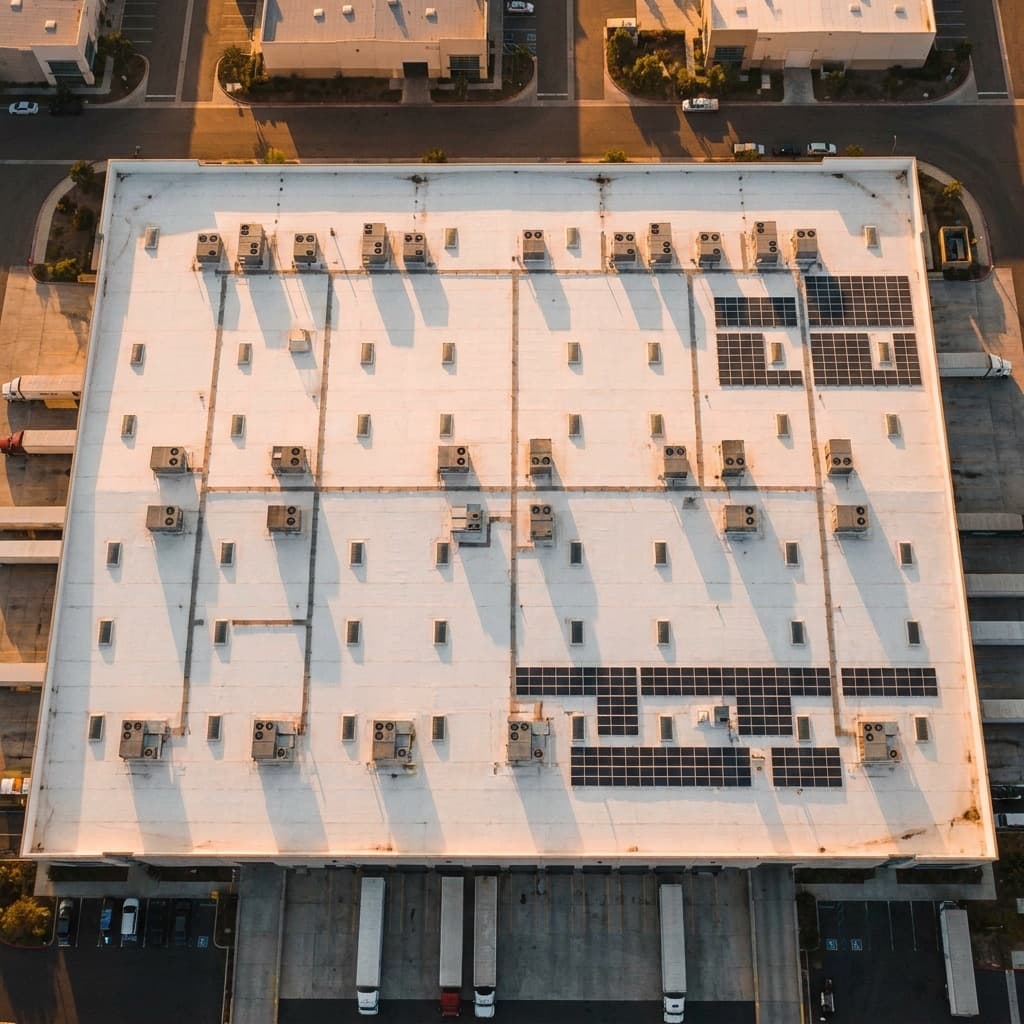
Cloudbreak records every roof section and rooftop unit before a storm, in photos, drone video and notes, so each roof's condition on a given date is on file.
Sources
The tool does arithmetic only and sends nothing anywhere. The rules it follows are from the published sources below.
- 1. Fannie Mae: Instructions for Performing a Multifamily Property Condition Assessment (Version 2.0), Appendix D: Guidance on Preparing PCA Report Schedules and Tables
- 2. USDA Forest Service, Missoula Technology and Development Center: Overview of Roofing Materials for Forest Service Facilities, Tech Tip 0071-2314-MTDC (March 2000)
- 3. Nevada Division of Insurance: Roof Surface Payment Schedule, HO 88 02 01 14
- 4. Fannie Mae: Instructions for Performing a Multifamily Property Condition Assessment (Version 2.0), Appendix F: Estimated Useful Life Tables
- 5. U.S. Department of Housing and Urban Development: CNA e-Tool Estimated Useful Life Table
- 6. Professional Roofing, National Roofing Contractors Association: Evidence of depreciation (November 2003)
- 7. National Association of Home Builders and Bank of America Home Equity (copy hosted by Reserve Data Analyst): Study of Life Expectancy of Home Components (February 2007)