Pre-loss documentation in Fort Worth, TX
A dated record of every roof and exterior on your Fort Worth commercial and multifamily properties, in photos, drone video and written notes, made before the next storm.
We schedule each inspection with a certified inspection partner and check the package before it goes into your record.
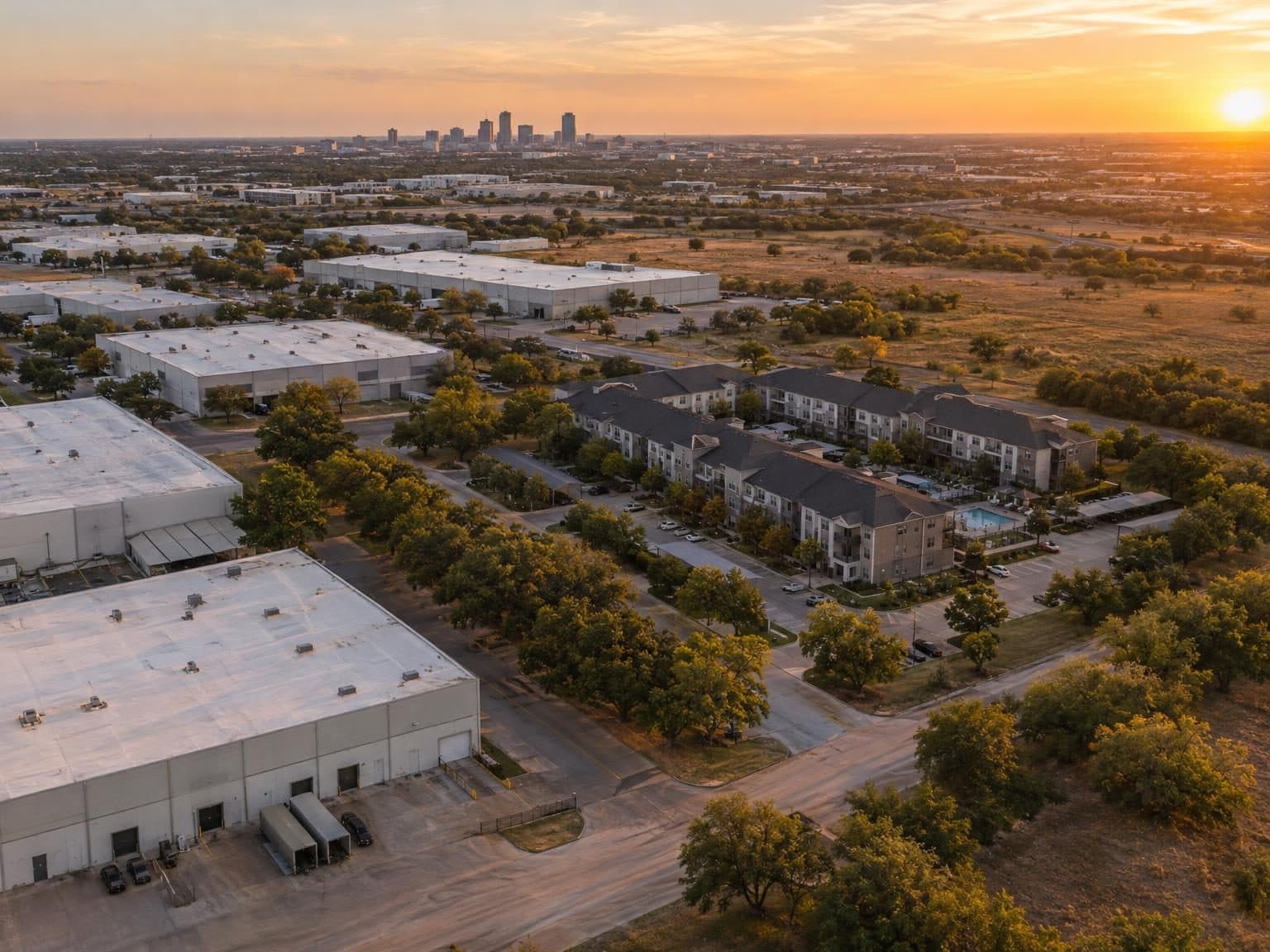
Hail in Fort Worth
- Hail days a year
- 7.9
- 1 inch or larger
- 6.3
Average within 15 miles of the center of Fort Worth, 2016 to 2025.
Source: NOAA/NWS Storm Prediction Center
Data through November 1, 2026
Full hail history for Fort WorthStorms and buildings in Fort Worth
Early on March 17, 2016, several supercells dropped hail up to the size of tennis balls on the Fort Worth area, with golf ball size hail at I-30 and Hulen Street.1 NOAA's Storm Events Database says the storms caused an estimated $600 million in damage in Tarrant County alone.1 On March 24, 2021, 3-inch hail fell near Wagley Robertson Road and West Bonds Ranch Road.2 On April 28, 2021, hail up to 3.25 inches hit northern Tarrant County and damaged or shattered roofs, windows and cars. NOAA's Storm Events Database puts hail damage estimates from that storm at over $500 million.3
Fort Worth has adopted the 2021 International Building Code and 2021 International Residential Code with local amendments.4 The city treats apartments with 3 or more dwelling units on a lot as commercial construction.5
Sources
- 1. NOAA NCEI Storm Events Database: Hail, Tarrant County, March 17, 2016
- 2. NOAA NCEI Storm Events Database: Hail, Tarrant County, March 24, 2021
- 3. NOAA NCEI Storm Events Database: Hail, Tarrant County, April 28, 2021
- 4. City of Fort Worth Development Services: Building & Energy Codes
- 5. City of Fort Worth Development Services: Submittal Requirements for Residential Remodels
What the record covers
The roof, section by section
Covering or membrane type and condition, seams, flashing, edges, parapets, penetrations, drains, rooftop equipment, and any repairs or patches, each in close-up and in a wider shot for context.
Every elevation
Wide views of each side of every building, so any photo can be placed on the property.
Drone photos and video
Views from several directions, each roof area and elevation, a perimeter video of the layout, and slower video of anything worth a closer look. Flown where law, weather and airspace allow.
Exterior equipment
Gutters, windows, HVAC and rooftop units, siding, fences, carports and solar panels: at least 10 close-up and 10 wider photos of each one present.
Written observations
For each item: where it is, what it is, its condition and size, and the photos that show it. Areas that couldn't be reached are listed with the reason.
Drainage, openings and outdoor structures
Downspouts, scuppers, drains and where they discharge; glazing, screens, doors, louvers and seals; condensers, vents and equipment screens; balconies, decks, patios, pergolas and detached structures.
The inspector's own roof report
The partner's normal roof inspection report, the same kind it gives its commercial customers, alongside our checklist record.
An exception list
Every area that couldn't be reached, every missing view, and any safety, weather or airspace limit, so gaps are on paper, not discovered later.
Original files
Full resolution, with timestamps and metadata intact. Nothing is compressed, edited or drawn over; marked-up copies come in addition to the originals.
In your portal
The report sits on each property's page in the Cloudbreak app, next to your policies.
How it works
01
Scope
We confirm the buildings, access, known hazards and the on-site contact for each property.
02
Inspect
A certified inspection partner works through our capture checklist on the roof, around each building and by drone.
03
Check
We review the package for missing views before it goes into your record. Anything that couldn't be captured is listed with the reason.
04
Walk through
We go over the findings with you on a call.
Questions
Who does pre-loss inspections for apartment complexes and commercial properties in Fort Worth?
Cloudbreak. We schedule each inspection in Fort Worth with a certified inspection partner, who works through our capture checklist on the roof, around each building and by drone. We check every package for missing views before it goes into your record.
How often does it hail in Fort Worth?
NOAA recorded hail within 15 miles of the center of Fort Worth on 7.9 days a year on average from 2016 to 2025, 6.3 of them with hail 1 inch or larger.
When should Fort Worth properties be documented?
Before the months with the most hail. April, May and March have the most hail days within 15 miles of the center of Fort Worth since 2010, in that order. A record made before then shows each building's condition going into the season.
What does the record cover?
Every roof section, every elevation, rooftop and exterior equipment, drone photos and video, and written notes on each item, in original files with their timestamps intact.
Pre-loss documentation in other Texas cities



Why Cloudbreak exists
We come from the commercial restoration side of the business, where we saw how insurance claims are really won and lost.
Cloudbreak puts that expertise on the owner’s side, with direct access to the people responsible, not a ticket queue.
No upfront cost. Policy reviews are free for any owner.