UL 2218
Roofing and building · Cloudbreak team · Updated October 29, 2026 · 8 sources
Definition
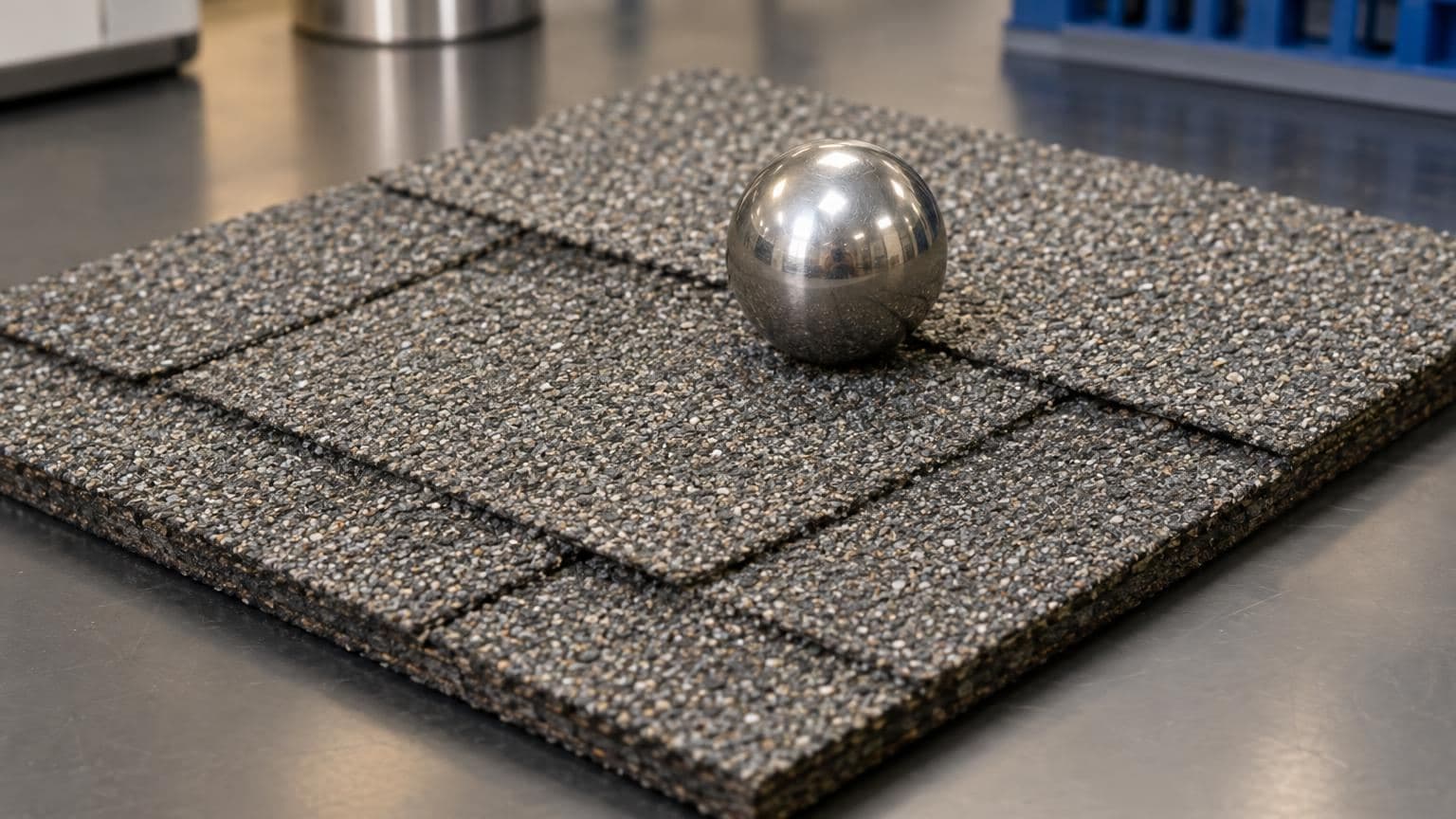
UL 2218 is a UL test standard that rates steep-slope roof coverings, such as asphalt shingles and metal panels, Class 1 to Class 4 for impact resistance with dropped steel balls. Class 4, the top rating, means the product still functioned after two hits in the same spot by a 2-inch ball.1,3,2
How it works
The test is run in a lab on new product, so it is not a promise about a real storm. A class says how a shingle or panel resisted steel balls in the lab; how a roof does in hail also depends on the hailstones, the roof's age and how it was installed.
UL 2218 covers prepared roof coverings: small units, sheets or panels laid in overlapping rows on slopes of 2:12 or steeper. Low-slope systems have a separate standard, UL 2218A.3,4
IBHS lists four steel ball sizes, 1.25, 1.5, 1.75 and 2 inches. Each is dropped from the height that gives it the kinetic energy of a hailstone of the same size. A published test paper by engineers Goode, Marshall and Smith gives the heights: 12 feet for Class 1 up to 20 feet for Class 4.2,5
Each test spot takes two hits within 1/2 inch of each other, aimed at weak points such as edges, corners, joints and unsupported areas. A product fails if a tear, fracture or crack through the material shows under 5X magnification. Flexible products are also bent over a 4-inch mandrel. Dents and crushed granules do not count.3,2,5
UL based its impact energies on real hailstones, but says no direct correlation is established between steel-ball and hail performance. The paper calls it an indexing test: a steel ball is far heavier than ice, so at equal energy it lands slower with much more momentum. Rigid products such as concrete tile and slate rarely rated above Class 1 or 2, so Factory Mutual developed ANSI FM 4473, an ice-ball test.3,5
Example
| Class | Steel ball and drop height | UL 2218 energy | FM 4473 ice ball energy | Nearly solid hail at terminal velocity |
|---|---|---|---|---|
| 1 | 1.25 in., 12 ft | 3.53 ft-lb (4.78 J) | 3.72 ft-lb | 3.4 ft-lb, 56 mph |
| 2 | 1.5 in., 15 ft | 7.35 ft-lb (9.95 J) | 7.77 ft-lb | 7.2 ft-lb, 61 mph |
| 3 | 1.75 in., 17 ft | 13.56 ft-lb (18.37 J) | 14.00 ft-lb | 13.3 ft-lb, 66 mph |
| 4 | 2 in., 20 ft | 23.71 ft-lb (32.12 J) | 26.13 ft-lb | 22.9 ft-lb, 71 mph |
The Class 4 drop carries about the energy of a nearly solid 2-inch hailstone (23.71 vs 22.9 ft-lb). A 2-inch stone of median density carries 13.8 ft-lb. A nearly solid 3-inch stone carries 117.8 ft-lb, about 5 times the Class 4 drop.5,6
A rating and a retest can differ. In IBHS tests reported in August 2014 on 22 store-bought asphalt shingles from five makers, none passed more than Class 2 impacts without at least one failing location, whether Class 4 rated or not. Impact-rated architectural shingles passed about 40% of Class 4 locations, against about 30% for basic ones.2
Where you'll see it
- Product packaging and data sheets: makers state the impact class of rated shingles and panels.
- Insurance discounts: some insurers and state programs give premium credits for impact-rated roofs, each with its own accepted tests and paperwork.
- Loss prevention guides: IBHS recommends UL 2218 Class 4 for steep-slope roofs in hail-prone areas and lists it beside FM 4470 Class 1-SH for low-slope roofs.1
State rules
- Texas, product labels: for Texas homeowners and TWIA credits on roofing installed from January 1, 1999, each shingle, tile, panel or sheet must carry a UL or TDI-approved lab label, its UL 2218 class, the maker's name, the year made and the brand.7,8
- Texas, TWIA credits: TDI's page (as of February 24, 2023) says TWIA gives credits only for roofing that passed UL 2218 as Class 1, 2, 3 or 4, with TDI form PC068 completed by the contractor. Other Texas insurers set their own discounts and accepted tests.8
Questions
- What does UL 2218 Class 4 mean?
- Published summaries of the test describe two hits in one spot by a 2-inch steel ball dropped 20 feet, leaving no tear, fracture or crack through the material under 5X magnification. Dents and crushed granules are allowed.1,2,5
- What size hail can a Class 4 roof withstand?
- UL says no direct correlation between steel-ball and hail performance is established, and the test does not evaluate aging. The Class 4 drop, 23.71 ft-lb, roughly matches a nearly solid 2-inch hailstone at 22.9 ft-lb.3,5,6
Cloudbreak
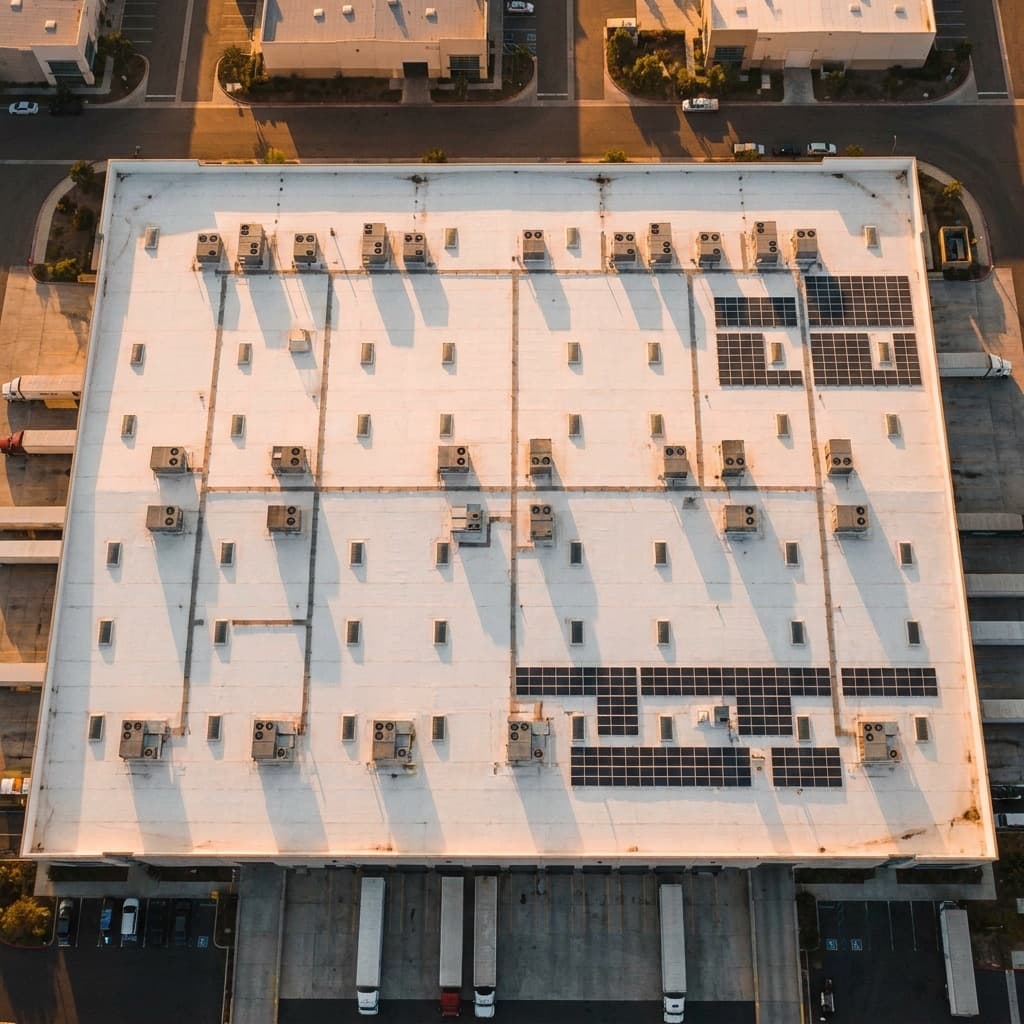
Cloudbreak records every roof section and rooftop unit before a storm, in photos, drone video and notes, so each roof's condition on a given date is on file.
Sources
Written by the Cloudbreak team. Numbers, dates and rules cite the published sources below.
- 1. Insurance Institute for Business & Home Safety: Commercial Roofs Best Practices Guide
- 2. IBHS: Relative Impact Resistance of Asphalt Shingles: Summary of UL 2218 Impact Tests (August 2014)
- 3. UL Standards & Engagement: UL 2218: Impact Resistance of Prepared Roof Covering Materials (revised May 28, 2024)
- 4. UL Standards & Engagement: UL 2218A: Impact Resistance of Roofing Systems (published August 2, 2019, revised June 14, 2024)
- 5. Haag Engineering: Testing of Impact-Resistant Asphalt Shingles (Goode, Marshall and Smith)
- 6. FM Global: Property Loss Prevention Data Sheet 1-34: Hail Damage (March 2018 edition, interim revision April 2026)
- 7. Texas Department of Insurance: Commissioner's Bulletin B-0030-98: Mandatory Roof Covering Credits and Endorsement HO-145 (April 23, 1998)
- 8. Texas Department of Insurance: Products qualifying for impact-resistant roofing credits (as of February 24, 2023)