Severe convective storm
Hail and wind · Cloudbreak team · Updated October 29, 2026 · 9 sources
Definition
A severe convective storm (SCS) is a thunderstorm strong enough to cause damage through hail, straight-line wind or tornadoes. Insurers and catastrophe modelers use the term to group these losses. In weather terms, the National Weather Service calls a thunderstorm severe when it produces hail 1 inch or larger, winds of 58 mph or more, or a tornado.1
How it works
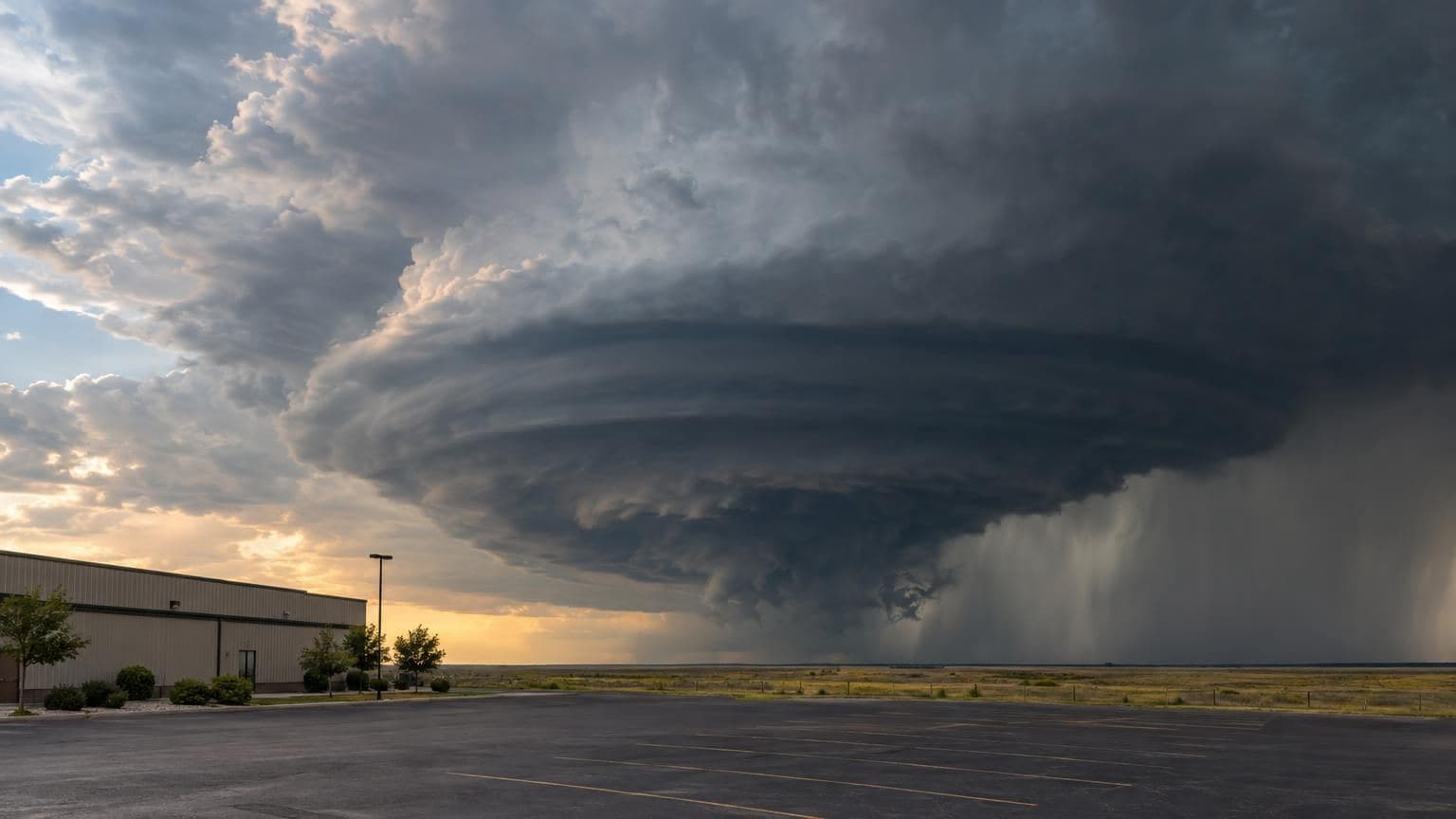
Convection is the vertical movement of heat and moisture by updrafts and downdrafts in an unstable atmosphere, and a thunderstorm is one form of it. A thunderstorm needs moisture, rising unstable air and something to lift that air, such as hills or a meeting of warm and cold air. The stronger the updraft, the larger the hail it can hold aloft.
A thunderstorm is severe when it produces hail 1 inch or larger, winds of 58 mph (50 knots) or more, or a tornado. The SPC calls it significant severe at hail 2 inches or larger, winds of 75 mph (65 knots) or more, or an EF2 or stronger tornado.1,2
One storm can bring any mix of tornado, hail and wind. Organized storms, such as supercells, squall lines and multicell complexes, are the most capable of damage, according to the SPC.2
The greatest threat runs from Texas to southern Minnesota. Storms peak on spring and summer afternoons and evenings, but they occur year-round.3
In insurance
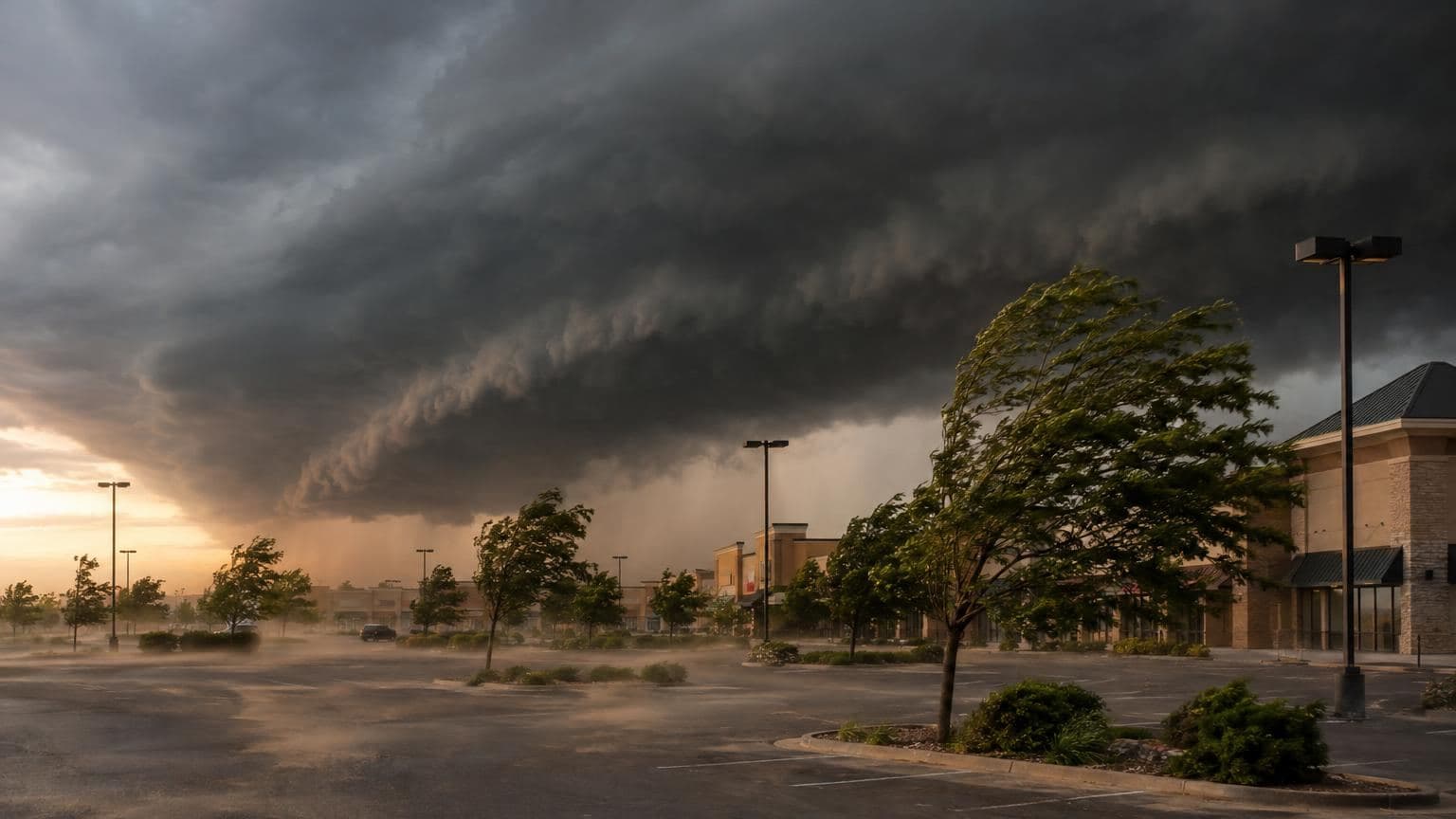
Insurers treat severe convective storm as one peril group: hail, tornado and straight-line wind, including derechos, from the same weather system. A single outbreak can damage property across several states over a few days, so loss tables often report it as one event.
Aon's list of the costliest US catastrophes involving tornadoes, published by the Insurance Information Institute, names events such as "SCS Outbreak." Its totals may count tornado, hail, derecho winds and flash flooding from the same storms.4
NOAA's billion-dollar disaster dataset calls these severe local storms, and its "severe storm" type covers tornado, hail and straight-line wind damage. NOAA says SCS cause the most US events costing $1 billion or more.5,6,7,4
Example
On April 11, 2016, a supercell formed near Wichita Falls, Texas, and moved east-southeast, leaving a damage path nearly 200 miles long. RICOWI's report lists the Storm Events hail reports for the three counties mainly affected in the northern Dallas-Fort Worth area, Denton, Collin and Rockwall:8
| County | 0.75 to 1.75 in. | 2.0 to 2.75 in. | 3.0 in. and up |
|---|---|---|---|
| Denton | 7 | 5 | 1 |
| Collin | 9 | 9 | 3 |
| Rockwall | 2 | 1 | 2 |
| Total | 18 | 15 | 6 |
Around Wylie, hail reports reached 5.25 inches and an estimated 80% of roofs were damaged. A damage estimate cited by RICOWI put residential losses near $250 million, not counting vehicles or commercial property.8
Where you'll see it
- SPC Convective Outlooks: Day 1 to 3 risk categories from 1 (Marginal) to 5 (High), plus a Day 4 to 8 outlook.2
- NWS Severe Thunderstorm Warnings, issued when radar indicates or a spotter reports hail 1 inch or larger or winds of 58 mph or more.1
- Storm Data, which records Hail, Thunderstorm Wind and Tornado as separate event types; Thunderstorm Wind means convective wind within 30 minutes of lightning being observed or detected.9
- NOAA's Severe Convective Storms Reference Guide, which lists public datasets such as the Storm Events Database (more than 75 years of records) and archived NEXRAD radar data back to 1991.7
Questions
- What is a severe convective storm in insurance?
- It is the industry's label for thunderstorm losses: hail, tornado and damaging straight-line wind. Aon's definition, used in Insurance Information Institute tables, may also include flash flood impacts from the same events. NOAA groups tornado, hail and straight-line wind damage as severe local storms.4,5
- What makes a thunderstorm severe?
- Hail 1 inch or larger, winds of 58 mph or more, or a tornado. Any one is enough.1,2

Cloudbreak
Cloudbreak's proprietary predictive storm engine, built with AI and backed by meteorologists, tracks every storm against every building, before it hits and after it passes.
Sources
Written by the Cloudbreak team. Numbers, dates and rules cite the published sources below.
- 1. NOAA National Weather Service: NWS Glossary: Severe Thunderstorm
- 2. NOAA Storm Prediction Center: SPC Products
- 3. NOAA National Severe Storms Laboratory: Severe Weather 101: Thunderstorm Basics
- 4. Insurance Information Institute: Facts + Statistics: Tornadoes and thunderstorms
- 5. NOAA National Centers for Environmental Information: U.S. Billion-dollar Weather and Climate Disasters, 1980 to present (NCEI Accession 0209268)
- 6. NOAA National Centers for Environmental Information: Billion-Dollar Weather and Climate Disasters: Summary Stats, 1980 to 2024
- 7. NOAA National Centers for Environmental Information: Hazards at a Glance: Severe Convective Storms Reference Guide
- 8. RICOWI: Hailstorm Investigation Report: North Texas, April 11, 2016 (published April 30, 2017)
- 9. NOAA National Weather Service: NWS Instruction 10-1605: Storm Data Preparation (July 26, 2021)