100-year flood
Hail and wind · Cloudbreak team · Updated October 29, 2026 · 10 sources
How it works
The name describes odds, not a schedule. The 100-year flood level at a point on a river is usually estimated from a statistical distribution of the floods recorded there in the past.3,2,4
Every year starts with the same 1% chance, so 100-year floods can happen two years in a row. Over a long record they arrive unevenly: in 1,000 years of streamflow record, about 10 floods would equal or exceed the 100-year flood, with 15 or fewer years between them in some stretches and 150 or more in others.5,2
The estimate also moves when the basin changes. Shifts in rainfall, land use, new reservoirs, more paved surface and flood control works can all raise or lower the 100-year flood at a site.2,4
The federal government uses the 1% annual chance flood as the basis of the National Flood Insurance Program (NFIP). The area it would cover on a Flood Insurance Rate Map is the special flood hazard area (SFHA), where NFIP floodplain management rules are enforced and the mandatory purchase of flood insurance applies.2,6,7
Example
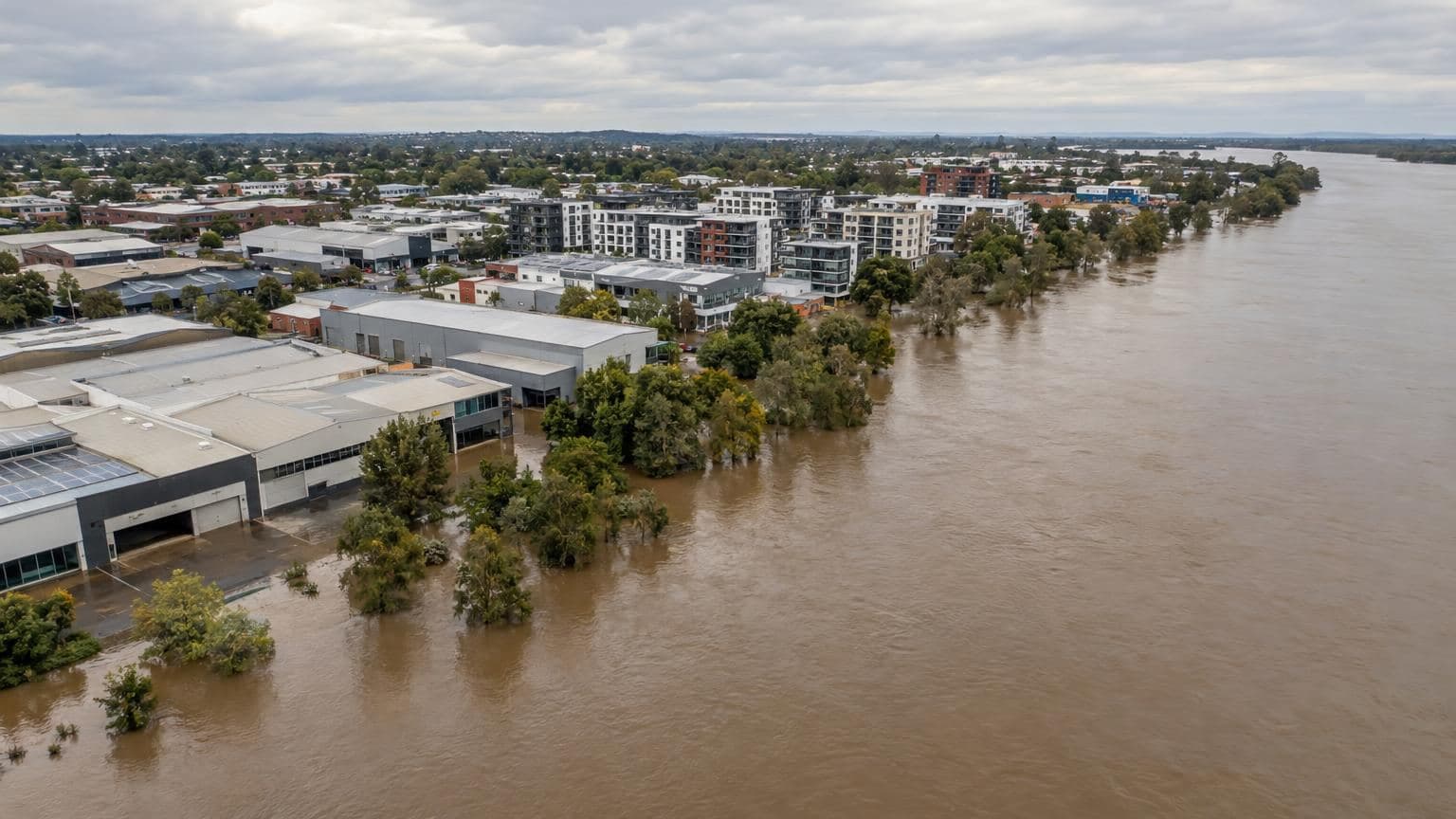
USGS gives the standard worked figure: a home in the 100-year floodplain has a 26% chance of flooding at least once during a 30-year mortgage, because each of the 30 years carries a 1% chance. The table applies the same rule to other periods: the chance is 1 minus 0.99 raised to the number of years, or 1 minus 0.998 for the 500-year (0.2%) flood.2
| Period | 100-year flood (1% a year) | 500-year flood (0.2% a year) |
|---|---|---|
| 1 year | 1% | 0.2% |
| 10 years | 9.6% | 2.0% |
| 30 years | 26% | 5.8% |
| 50 years | 39.5% | 9.5% |
Where you'll see it
- Flood Insurance Rate Maps (FIRMs): zones A, AE, AH, AO, AR, A99, V and VE mark the SFHA. Shaded zone X (or B) lies between the 100-year and 500-year limits, and unshaded zone X (or C) is minimal hazard.6
- Base flood elevation (BFE): the height the water would reach in the 1% annual chance flood, shown on the FIRM for zones such as AE, AH and VE.8
- Elevation Certificates, which FEMA encourages communities to use to record that new buildings and substantial improvements in SFHAs are properly elevated. Owners can also use one to obtain flood insurance.9
- Flood insurance requirements: mandatory purchase applies in the SFHA, and a lender might require a set amount. The NFIP General Property Form for commercial buildings offers up to $500,000 for the building and $500,000 for contents (FEMA, January 2024).7,10
- Floodplain management standards: most federal and state agencies use the 1% annual chance flood as their standard.1
Questions
- Does a 100-year flood happen only once every 100 years?
- No. It has a 1% chance every year, and each year starts with the same chance, so two can happen in consecutive years.5
- What are the chances of a 100-year flood in 30 years?
- About 26%. FEMA gives that figure for a structure in a special flood hazard area over a 30-year mortgage, and USGS gives it for a home in the 100-year floodplain.1,2
- What is the difference between a 100-year and a 500-year flood?
- A 100-year flood has a 1% chance of being equaled or exceeded in a year; a 500-year flood has a 0.2% chance. On FIRMs, shaded zone X lies between the two boundaries.2,6
- Is the 100-year floodplain the same as a flood zone?
- The 100-year floodplain is the special flood hazard area, shown on FIRMs as A and V zones. Other zones, such as X, mark moderate and minimal flood hazard outside it.6
Cloudbreak
Cloudbreak's proprietary predictive storm engine, built with AI and backed by meteorologists, tracks every storm against every building, before it hits and after it passes.
Sources
Written by the Cloudbreak team. Numbers, dates and rules cite the published sources below.
- 1. FEMA Emergency Management Institute: Independent Study Course Glossary
- 2. U.S. Geological Survey Water Science School: Floods and Recurrence Intervals (June 11, 2018)
- 3. NOAA National Weather Service: NWS Glossary: 100-year Flood
- 4. U.S. Geological Survey Water Science School: Floods: Things to Know (June 8, 2018)
- 5. U.S. Geological Survey: We had a "100-year flood" two years in a row. How can that be?
- 6. FEMA: Flood Zones
- 7. FEMA: Special Flood Hazard Area (SFHA)
- 8. FEMA: Base Flood Elevation (BFE)
- 9. FEMA: Elevation Certificate
- 10. FEMA NFIP: National Flood Insurance Program Summary of Coverage: Commercial Property (January 2024)